Understanding Nail Damage: Causes, Prevention, and When to See a Professional

Nail health is something most of us think about only after something goes wrong. A broken nail, peeling edges, or a surface that feels rough and thin: these are signs your nails are telling you something. As part of our complete nail health and care guide, this post takes a focused look at nail damage: what causes it, how to prevent it, and when it makes sense to get a professional involved. Whether you wear enhancements regularly, enjoy the occasional gel manicure, or prefer bare nails, understanding what damages nails, and what protects them, makes a real difference in how your hands look and feel long-term.
What Is Nail Damage and Why Does It Happen?
Nail damage covers a wide range of changes, from minor surface issues like peeling or brittleness to more significant problems like splitting, thinning, or discoloration. According to general nail care research, most nail damage has a clear, identifiable cause. That's actually good news, because it means most damage is also preventable.
Nails are made of a protein called keratin, layered in flat, overlapping cells. When those layers are disrupted, by chemicals, physical force, or improper tools, the nail loses its structural integrity. Fingernails grow back within roughly six months under healthy conditions, so the consequences of damage aren't permanent. But six months is a long time to deal with weak, uncomfortable, or uneven nails.
There are two broad categories of nail damage worth knowing:
- External damage: caused by physical injury, harsh products, improper removal techniques, or environmental exposure
- Internal factors: related to nutrition, hydration, or underlying health changes that affect nail strength and appearance
This guide focuses on the external causes that show up most often in a salon setting, since those are the ones where professional care and smart habits make the biggest difference. If you notice changes in your nails that seem unrelated to anything you've done differently, a visit to a qualified healthcare provider is always worth considering: this guide is educational, not a substitute for professional health advice.
The Most Common Causes of Nail Damage
Most nail damage doesn't happen all at once. It builds gradually through repeated habits: some that seem harmless, some that feel like shortcuts, and some that are simply the result of not knowing better. Here are the most common culprits.
DIY Removal of Nail Enhancements
Peeling or forcing off gel polish, acrylics, or dip powder is one of the leading causes of thin, damaged nails. When a nail enhancement is pulled away before it's properly broken down, it takes layers of the natural nail with it. Studies on nail biology suggest that the nail plate can lose significant thickness after repeated improper removal: some estimates point to up to 25% of surface nail cells being removed in a single aggressive peel-off session. That kind of repeated thinning leads to nails that bend easily, break at low impact, and feel sensitive.
Over-Filing and Aggressive Buffing
Filing in a back-and-forth sawing motion generates friction and heat that weakens the nail edge. Buffing too aggressively, especially with coarse-grit tools, removes nail surface layers that are difficult to restore quickly. Many at-home kits include buffers that are far too rough for regular use on natural nails.
Harsh Chemicals Without Protection
Cleaning products, acetone used without conditioning, and extended water exposure all strip moisture from the nail and surrounding skin. Nails that are repeatedly exposed to bleach, detergents, or drying solvents without glove protection become brittle over time. Research consistently shows that wearing gloves during household cleaning is one of the simplest and most effective ways to preserve nail condition.
Infrequent Maintenance and Neglect
Nails that go too long without care can develop snags, uneven edges, and splitting, especially if they're left to grow without shaping or sealing. Skipping regular upkeep doesn't give nails a "rest." It often allows small problems to become larger ones.
Signs Your Nails Are Telling You Something Is Wrong
Learning to recognize early signs of nail damage means you can address issues before they require serious intervention. Here's what to look for:
Surface and Texture Changes
- Peeling layers: the nail surface separates horizontally into thin sheets
- Pitting or ridging: small indentations or vertical lines along the nail surface
- Rough or chalky texture, often a sign of dehydration or product buildup
Structural Changes
- Unusual flexibility or softness: nails that bend easily under minimal pressure
- Breaking below the fingertip, when nails consistently break at or below the skin line, that signals structural weakness
- Splitting at the free edge: vertical splits that travel toward the base of the nail
Color and Appearance Changes
- White spots, usually harmless and often caused by minor impact
- Yellow tinting: commonly linked to long-term dark polish use without a base coat
- Discoloration after injury: dark bruising under the nail following a trauma like a door slam or dropped object is normal, but the nail may eventually fall off and regrow
If you notice any changes that seem unusual, persistent, or accompanied by discomfort, it's always a good idea to check in with a healthcare provider. Nail appearance can sometimes reflect broader health changes, and that's outside the scope of what a salon can assess.
How Professional Nail Care Prevents Damage
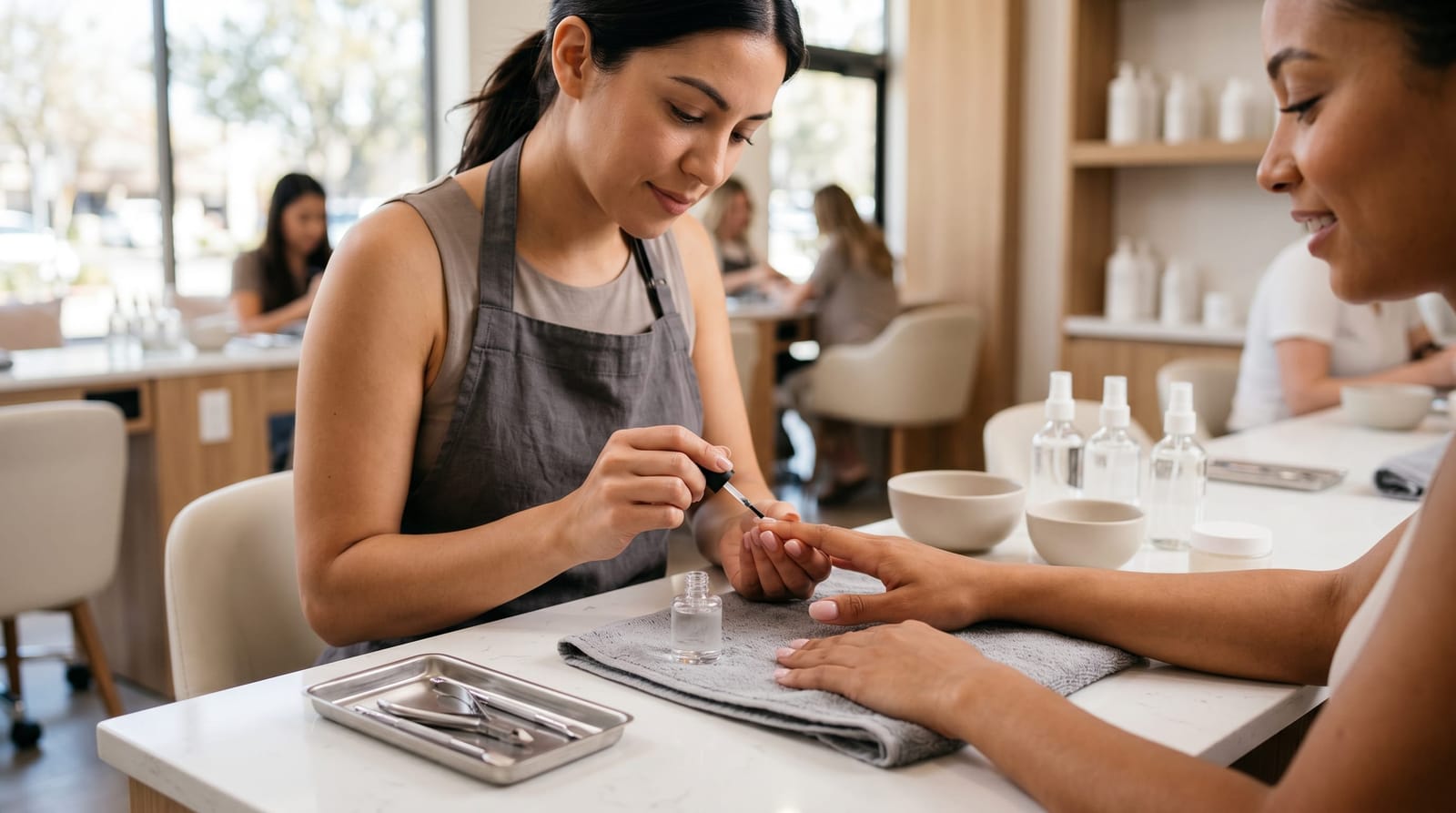
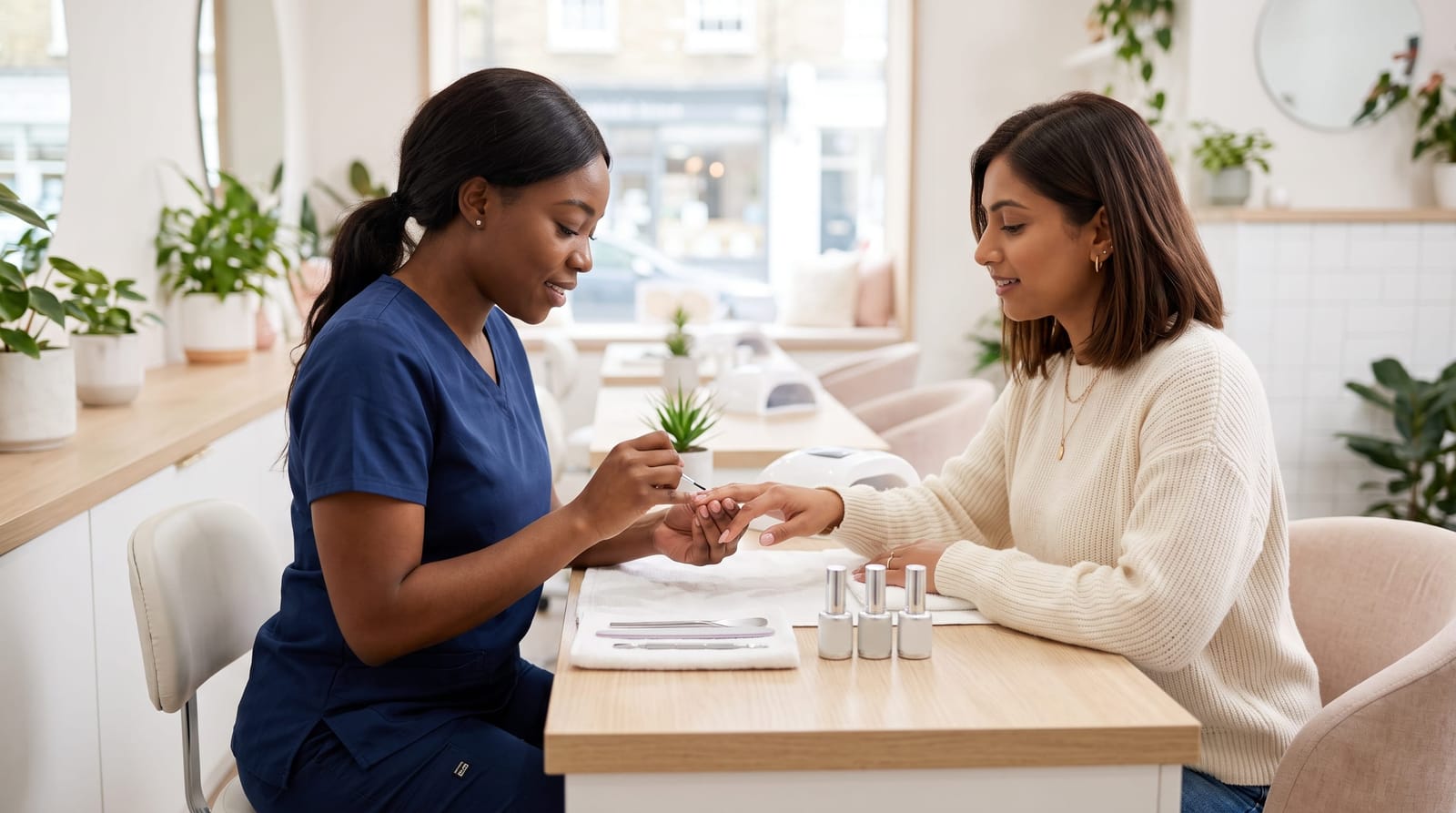
There's a meaningful difference between a rushed nail appointment and one that prioritizes nail health alongside aesthetics. At NailzByDelz, the approach to every service is built around protecting the natural nail, not just achieving a beautiful result in the moment.
Proper Removal Techniques
Professional removal uses the right products at the right saturation levels, with enough soak time to release the enhancement cleanly. This is one of the most important factors in nail health for anyone who wears gel or other enhancements regularly. Gentle removal, without forcing or peeling, keeps the nail plate intact. If you're someone who enjoys wearing enhancements often, understanding nail health with nail enhancements is a great place to deepen your knowledge on this topic.
Correct Filing and Shaping
Professional-grade files are selected by grit for the job at hand: shaping, smoothing, or finishing. A skilled nail tech files in one direction, at a consistent angle, to shape the nail without fraying the edge. This alone makes a significant difference in how long nails stay strong between appointments.
Sterilization and Clean Tools
Proper sanitation isn't just a hygiene standard: it directly protects nail health. Using properly sterilized tools prevents cross-contamination and reduces the risk of irritation. This is a non-negotiable part of professional nail care and something worth asking about in any salon you visit.
Moisturizing and Cuticle Care
Hydration is one of the most underrated parts of a professional manicure. Nails and cuticles that are regularly conditioned retain moisture better, which directly supports nail flexibility and resilience. Dry, neglected cuticles make the nail more vulnerable to damage at the base, where growth originates.
When to Take a Nail Break: and What That Actually Means
The idea of a "nail break" comes up often, and it's worth addressing directly. Taking a break from nail enhancements or regular manicures doesn't mean nails will automatically repair themselves faster. In most cases, bare nails without care are more vulnerable, not less.
A genuine nail break means:
- Removing all enhancement product properly and completely
- Keeping nails trimmed short to reduce breakage risk while they rebuild
- Moisturizing daily: nails and cuticles benefit from regular hydration just like skin does
- Wearing gloves for cleaning, gardening, and extended water exposure
- Avoiding harsh chemicals directly on the nail surface
For clients who want to transition away from enhancements and let natural nails grow in, our detailed guide on how to grow nails after removing enhancements walks through exactly how to do that with your nail health in mind.
A break is also a good time to schedule a professional assessment. A skilled nail technician can look at your nails' current condition, identify any areas of concern, and recommend a care plan that supports healthy regrowth: rather than leaving you guessing.
The Nail Repair Service: Addressing Damage Before It Gets Worse
Minor nail damage, a split, a crack, a section that's lifted or thinned, doesn't always mean starting from scratch. When addressed early, many forms of surface and structural damage can be managed with targeted repair work rather than removal of all existing nail product.
NailzByDelz offers a Nail Repair service specifically for moments when one or two nails need attention between regular appointments or following unexpected damage. The goal is to stabilize the nail, protect the natural nail underneath, and maintain the look of the rest of your set: rather than letting a small problem snowball into something that affects the full hand.
Think of nail repair the same way you'd think about addressing a small chip in your windshield. Catching it early is faster, less expensive, and more effective than waiting until the damage spreads. Nails work the same way: early attention means better outcomes.
This also connects to a broader point about maintenance frequency. Many nail issues that clients bring to the salon could have been avoided with slightly more regular appointments. The longer an enhancement is left past its ideal fill window, or the longer a damaged edge goes unaddressed, the more the surrounding nail is affected.
Want to Dig Deeper Into These Topics?
This guide gives you a solid foundation for understanding nail damage causes and prevention. If you want to explore specific aspects in more detail, here are a few areas covered in depth elsewhere in our nail health content:
- Managing nail health through consistent enhancement wear: covered in our guide on nail health with nail enhancements
- The step-by-step process of letting natural nails grow back after enhancements are removed: explored in our post on how to grow nails after removing enhancements
Key Takeaways
Most nail damage is preventable. The biggest contributors, improper removal, aggressive filing, chemical exposure, and neglect, all have clear, manageable solutions. Knowing the warning signs of nail damage early means you can take action before minor issues become lasting problems. Professional nail care plays a real role here, not just in creating beautiful results, but in protecting the nail's structure throughout the process.
If your nails are showing signs of wear, or you're not sure where to start with rebuilding their strength and condition, we'd love to help. Book an appointment with NailzByDelz and let's take a look at what your nails need right now, and build a care plan that keeps them looking and feeling their best.