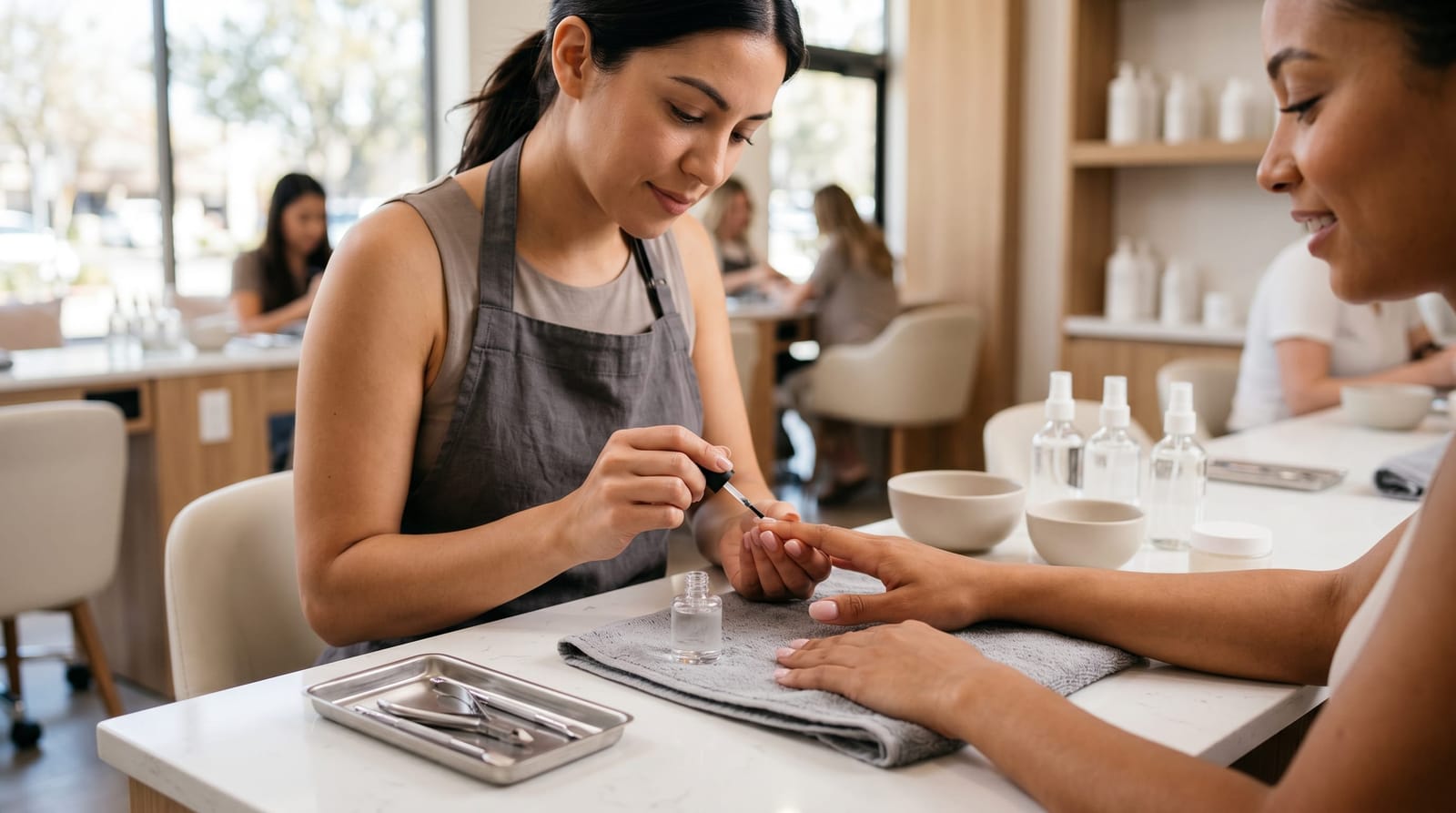
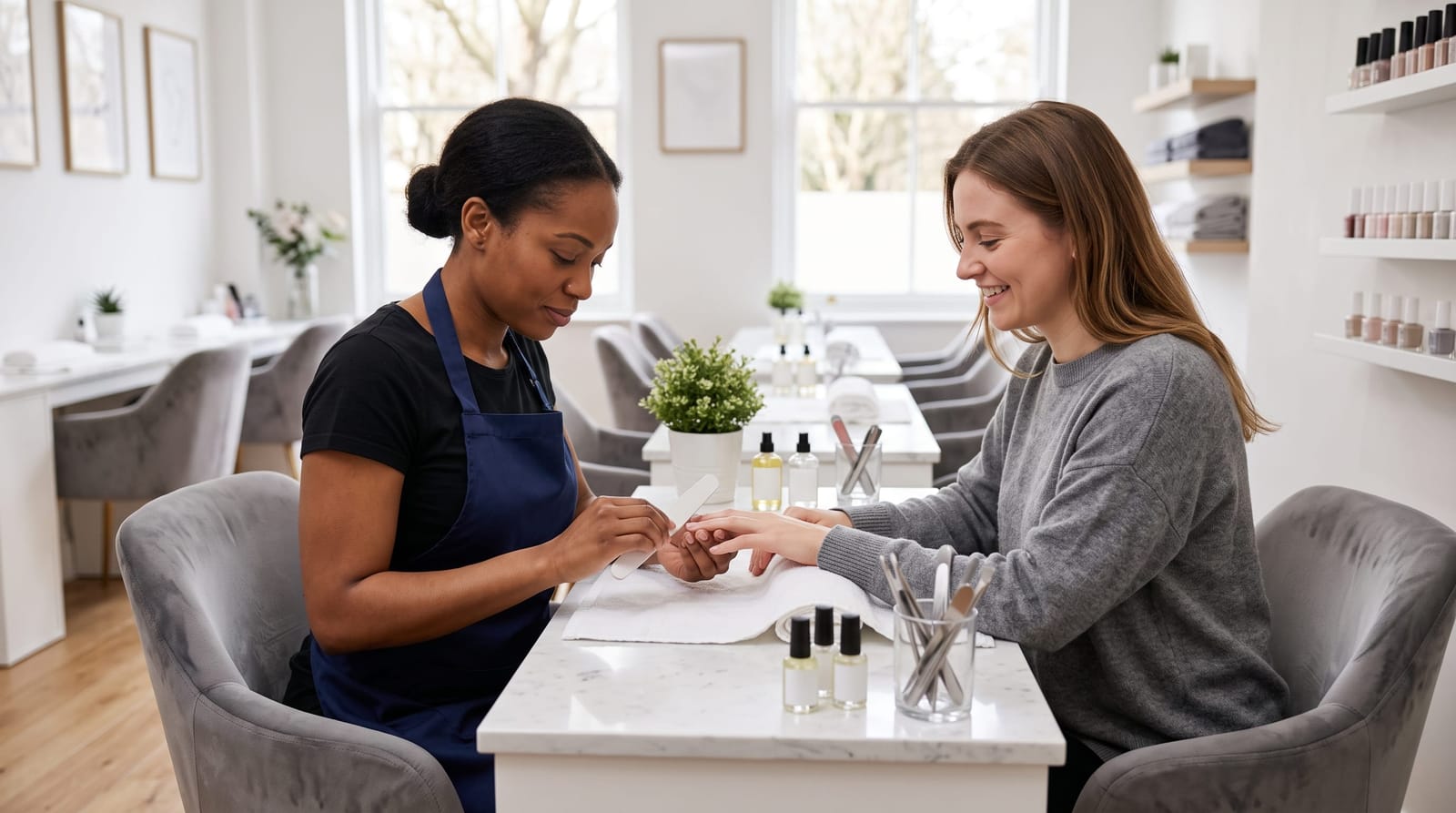
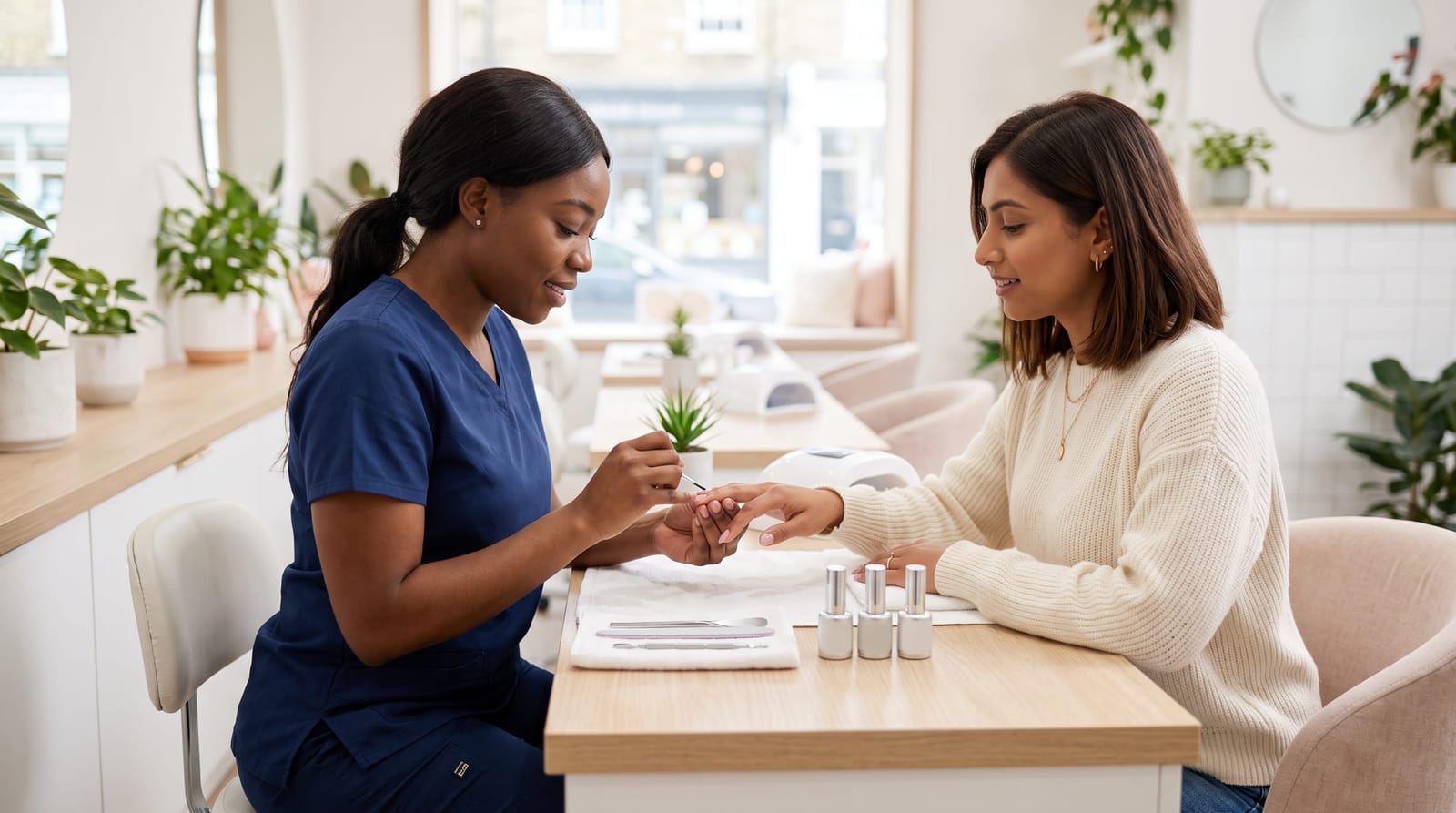
Complete Nail Health & Care Guide for Women in Liberty Lake, Airway Heights & Coeur d'Alene
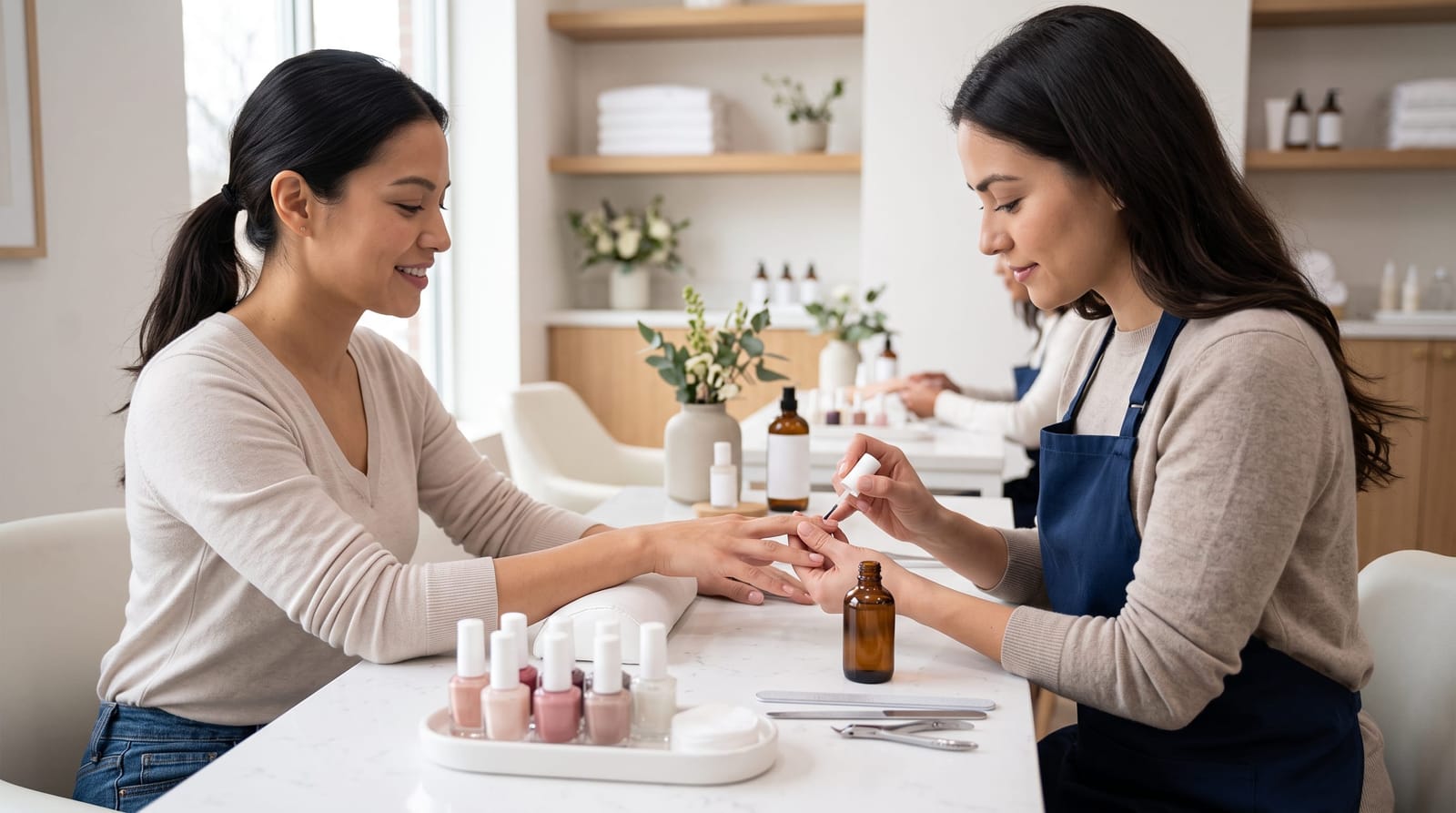
Have you ever looked down at your nails and wondered why they keep peeling, breaking, or just refusing to grow past a certain length: no matter what you try? You're not alone. For women across Liberty Lake, Airway Heights, Coeur d'Alene, and the surrounding Spokane area, nail health is something that comes up again and again, both inside the salon and out. The truth is, beautiful nails aren't just about the polish on top. They start from the inside out, and they're shaped by everything from your daily habits to the quality of care you receive at your nail appointments.
This complete nail health and care guide was created to answer the questions we hear most often, and a lot of the ones you haven't known how to ask yet. Whether you're brand new to nail enhancements, you've worn acrylics for years, or you're somewhere in between, this guide gives you a full picture of what healthy nails actually look like, what gets in the way of them, and how thoughtful professional care fits into the equation. We'll walk through nail anatomy, common nail problems, how popular services like GelX, Acrylic, and Overlay work with your natural nails, the role of diet and hydration, and the aftercare habits that make the biggest difference between appointments.
Consider this your go-to nail health and care reference: the kind of resource you'll come back to every time a new nail question comes up.
Understanding the Basics: What Are Your Nails Actually Made Of?
Before diving into nail health tips and care routines, it helps to understand what you're actually working with. Nails are made primarily of a protein called keratin: the same protein that makes up your hair and the outer layer of your skin. Keratin is naturally strong and flexible, but it's also porous and responsive to its environment. That means your nails absorb and lose moisture, react to chemicals, and reflect what's happening internally in your body.
The Key Parts of Your Nail
Your nail has several distinct parts, and each one plays a role in how healthy and strong your nails appear:
- Nail plate: The visible, hard surface of your nail: this is what you paint, file, and shape.
- Nail bed: The skin directly beneath the nail plate. Healthy nail beds are pink and well-attached to the nail above them.
- Nail matrix: The tissue hidden beneath the base of your nail, just under the skin. This is where new nail cells are produced. Damage to the matrix can affect how your nail grows long-term.
- Cuticle: The thin layer of skin at the base of your nail plate. It acts as a natural seal, protecting the matrix from bacteria and infection. This is why proper cuticle care, not aggressive cutting, matters so much.
- Lunula: The small, half-moon shaped area at the base of your nail, which is actually the visible part of the nail matrix.
Understanding these structures helps explain why certain habits, products, or services affect nail health the way they do. When the matrix is healthy and the nail bed is properly nourished, nails grow in stronger, more evenly, and with better natural flexibility. When something disrupts those foundational structures, you'll usually see it reflected in the quality of the nail itself.
Nails grow on average about 3.5 millimeters per month, according to research published in various dermatological journals, though growth rate is influenced by age, nutrition, dominant hand use, and seasonal temperature changes. Knowing your nails' natural growth rhythm helps set realistic expectations around maintenance schedules.
Common Nail Problems Women Experience: and Why They Happen
A solid nail health and care guide has to address the problems that actually show up in everyday life. If you've experienced any of the following, you're in good company, and more importantly, most of these issues have practical solutions.
Peeling and Flaking Nails
Peeling nails are one of the most common concerns we hear about. The nail plate is made up of multiple layers of keratin, and when those layers separate, you get that frustrating papery peeling effect. The most frequent causes are dehydration (both internal and external), overexposure to water, use of drying chemicals like acetone without proper moisture restoration afterward, and nutritional gaps: particularly in iron and B vitamins.
Splitting and Breaking
Nails that split vertically or break horizontally often signal a combination of brittleness and stress. Overly dry nails become rigid and crack under pressure, while nails that are too soft (often from too much moisture or frequent soaking) tend to tear rather than break cleanly. A balanced approach to nail health, keeping nails moisturized without oversaturating them, is key. Protective enhancements, when applied correctly by a trained nail tech, can also help shield naturally fragile nails during a recovery period.
Discoloration
Yellowing, white spots, or uneven color in the nail plate can be caused by several things: prolonged use of dark nail polish without a proper base coat, product buildup, or changes in how the nail is growing from the matrix. If you notice persistent or unusual discoloration that doesn't clear up after a nail-free period, it's always a good idea to consult with a licensed healthcare provider, as nail appearance can sometimes reflect broader health patterns. This guide is educational and informational, not a substitute for professional medical advice.
Slow Growth or Thinning
Nails that seem to grow very slowly, or nails that feel noticeably thinner than they used to, are often responding to nutritional shifts, hormonal changes (common across different life stages), or damage to the nail matrix. Protective styling, consistent aftercare, and a nutrient-rich diet can all support healthier growth over time.
For a deeper look at these and other issues, our post on common nail problems solutions walks through how each concern is addressed in a professional nail setting.
How Professional Nail Services Affect Nail Health: The Truth
One of the biggest misconceptions around nail health is that enhancements are automatically damaging. The reality is more nuanced: the service itself matters far less than the quality of application, the products used, and the aftercare that follows. When done with care and skill, professional nail services can actually protect and support the nails underneath, especially for women with naturally fragile or thin nails.
GelX Extensions
GelX is a gel-based extension system that bonds directly to the natural nail using a gel adhesive and a full-coverage tip. Because GelX doesn't require drilling or heavy filing of the nail surface, it tends to be gentler on the nail plate than some other extension methods. The natural nail underneath is largely preserved, and with proper removal, meaning soaking off rather than aggressive picking or prying, the nail beneath typically comes away in good condition. At NailzByDelz, GelX applications emphasize healthy nail prep and proper adhesion so the extension wears evenly and lifts are minimized.
Acrylic Enhancements
Acrylics have been around for decades and remain one of the most durable and versatile nail enhancement options available. When applied correctly, with appropriate nail prep, proper product ratios, and even application pressure, acrylics can provide long-lasting wear without compromising the nail underneath. The key is in the hands doing the work. Improper application, overfiling, or DIY removal are the primary culprits behind the "acrylics ruin nails" narrative. With professional application and scheduled fills, acrylics are a reliable option for many women.
Overlay (Gel or Acrylic Over Natural Nail)
Overlay refers to applying a product layer, either gel or acrylic, directly over the natural nail without adding a tip extension. This is a great option for women who have natural nail length they want to preserve and protect, or for clients in a growth and strengthening phase. Overlays add a layer of durability and help prevent breakage while the natural nail grows underneath.
NailzByDelz's Sculpting Approach
At NailzByDelz, a sculpting-focused application method is used rather than relying on pre-formed tips as the primary structure. Sculpting builds shape and structure directly on the nail, which allows for a more customized fit, better balance across the nail plate, and reduced stress on the nail bed over time. This approach reflects a commitment to application quality, not just the final look, but what's happening to your natural nail in the process.
For more on how to maintain nail health between appointments while wearing enhancements, visit our guide on nail health with nail enhancements.
Your Nail Health and Care Routine Between Appointments
No nail health and care guide would be complete without talking about what happens between your salon visits. The time between appointments is where nail health is really built or broken. The good news is that a consistent, simple routine makes a significant difference, and it doesn't require a cabinet full of products.
Daily Hydration Habits
Moisture is one of the most important factors in nail health and care. This applies both to drinking enough water throughout the day and to applying external moisture to your nails and cuticles. Cuticle oil is one of the most effective, most underused nail care tools available. Applied daily, especially at night, a good cuticle oil works its way into the nail plate and surrounding skin, helping to prevent peeling, cracking, and lifting around enhancements. Look for oils that contain jojoba, vitamin E, or almond oil as primary ingredients.
Protecting Your Nails During Daily Tasks
Everyday exposure to cleaning products, dish soap, and prolonged water contact are some of the most consistent sources of nail damage. Wearing gloves while doing dishes or cleaning is one of the simplest and most effective nail health tips available. It takes a little getting used to, but the difference in how your manicure wears, and how your natural nails feel, is noticeable.
Filing and Shaping at Home
If you need to do any light shaping at home between appointments, always file in one direction rather than sawing back and forth. A glass nail file is a worthwhile investment: it's gentler on the nail edge than most drugstore options and causes less fraying of the nail layers over time. Never file aggressively on the nail surface itself.
Avoiding Habits That Compromise Nail Health
Using your nails as tools, opening packages, prying lids, scraping surfaces, puts concentrated stress on the nail tip and the enhancement bond. Over time, this contributes to breakage and lifting. Similarly, nail biting not only damages the nail plate but can disrupt the cuticle and surrounding skin, creating an entry point for bacteria.
For a complete, step-by-step aftercare routine tailored to GelX, Acrylic, and Overlay clients, see our nail aftercare routine post.
Diet, Nutrition, and Nail Health: What You Eat Shows Up on Your Fingertips
One of the most powerful nail health tips doesn't come in a bottle: it comes from your plate. Your nails are constantly growing, and that growth process relies on a steady supply of specific nutrients. When those nutrients are low, nails are often one of the first places the body shows it.
Key Nutrients for Nail Health and Care
- Biotin (Vitamin B7): Biotin is one of the most researched nutrients in relation to nail strength. Some studies suggest that supplementing with biotin may support nail thickness and reduce brittleness, though results vary by individual. Naturally occurring biotin is found in eggs, almonds, sweet potatoes, and salmon.
- Iron: Iron deficiency is linked to thin, brittle nails and in some cases a spoon-shaped nail appearance (called koilonychia). Iron-rich foods include red meat, lentils, spinach, and fortified cereals. If you suspect an iron deficiency, speak with your doctor about testing: this guide is not a substitute for medical advice.
- Protein: Since nails are made of keratin, a protein, adequate protein intake is essential. Women who follow restrictive diets may notice nail changes over time. Eggs, poultry, legumes, and Greek yogurt are accessible protein sources for most diets.
- Zinc: White spots on nails are sometimes associated with zinc deficiency, although this connection is not as straightforward as it's often presented. Zinc is found in meat, shellfish, seeds, and nuts.
- Omega-3 Fatty Acids: Found in fatty fish, flaxseed, and walnuts, omega-3s help nails maintain a healthy moisture balance and can reduce brittleness over time.
- Vitamin C: Important for collagen production, which supports the connective tissue around the nails. Citrus fruits, bell peppers, and strawberries are great sources.
Hydration: The Underrated Factor
It's worth repeating: proper hydration is one of the most impactful nail health tips that doesn't get enough attention. Dehydrated nails become rigid, brittle, and prone to peeling. Most adult women need somewhere in the range of 8-10 cups of water per day, though individual needs vary. If you find you're chronically dehydrated, you'll likely see it reflected in your skin, hair, and nails before almost anywhere else.
For a full breakdown of how your daily habits connect to your nail health and care outcomes, explore our dedicated post on diet for stronger nails.
Recognizing Nail Damage and Knowing When to Pause
Part of a strong nail health and care routine is knowing when your nails need a break, extra TLC, or professional attention. Nail damage comes in different forms, and not all of it is obvious right away. The sooner you recognize what's happening, the easier it is to address.
Signs Your Nails May Need Extra Care
- Nails that feel thin, bendy, or translucent compared to their normal appearance
- Persistent peeling or layering that doesn't improve with moisture
- Unusual texturing, ridging, or pitting on the nail surface
- Lifting or separation of the nail from the nail bed (if this occurs under an enhancement, don't attempt to reattach it at home: see your nail tech)
- Redness, swelling, or tenderness around the nail area (consult a healthcare provider if this occurs)
The "Nail Rest" Question
Many clients ask whether they should take a break from enhancements to "let their nails breathe." The idea that nails need oxygen from the air is actually a myth: nails receive nutrients and oxygen from the bloodstream through the nail bed, not from external air exposure. However, a rest period between enhancement cycles can still be beneficial for some clients: particularly as a chance to assess natural nail condition, complete a full nail growth cycle, and re-establish a care routine from scratch.
A skilled nail technician will be honest with you about what your nails look like at each appointment and guide you on whether a break or a service adjustment makes sense. At NailzByDelz, that kind of honest communication is part of the experience.
For a thorough understanding of what causes nail damage and how to avoid it, our article on nail damage causes and prevention goes deep on this topic.
Why Professional-Quality Application Matters for Nail Health
This nail health and care guide would be incomplete without addressing the single biggest variable in nail health outcomes for enhancement wearers: the quality of the person doing your nails. This isn't about brand loyalty: it's about understanding that application technique, product selection, and nail prep are where long-term nail health is made or lost.
Nail Prep Is Everything
The nail prep stage, cleaning, shaping, dehydrating, and properly priming the nail surface, determines how well an enhancement adheres and how evenly it wears. Skipped steps or shortcuts in prep are a primary cause of lifting, which traps moisture and debris between the enhancement and the nail plate, creating conditions that aren't good for the natural nail underneath.
Product Quality and Consistency
Professional-grade products are formulated differently from drugstore alternatives. They're designed for consistent viscosity, curing behavior (in the case of gel products), and adhesion properties. Using professional products correctly, in the right ratios, at the right consistency, produces results that are both more beautiful and more nail-friendly.
Proper Removal Technique
The removal process is where a lot of nail damage occurs, and most of it is avoidable. Whether you're having gel, GelX, or acrylics removed, soaking and careful, patient removal is the method that preserves the most natural nail. Forcing, picking, or peeling enhancements off without proper soaking strips layers of the nail plate along with the product. Always have your enhancements removed by a professional, or if you need to do it at home, follow your nail tech's specific guidance.
Regular Fills and Maintenance Schedules
Staying on a regular maintenance schedule, typically every 2-3 weeks depending on your nail growth rate and the service type, keeps enhancements balanced and prevents the kind of structural stress that occurs when grown-out nails bear uneven weight. Overgrown enhancements are more likely to lift, catch, and break, which creates more nail stress than the enhancement itself would have caused if maintained properly.
Nail Health Across Different Life Stages
Nail health and care needs shift across different stages of life, and what works for a teenager's nails may be different from what works for a woman in her 40s or 50s. This matters especially for our clients in Liberty Lake, Airway Heights, Coeur d'Alene, and the broader Spokane area, where we serve women ranging from teens to their 60s and beyond.
Teenagers and Young Adults (Ages 14-25)
Younger nails are often stronger and more resilient, but they're also more reactive to hormonal changes. Nail biting, aggressive filing, and skipping aftercare are common habits in this age group that can create lasting patterns. Building a consistent nail care routine early, including daily moisturizing and protective habits, sets a strong foundation.
Adults in Their 30s and 40s
This is often when the effects of years of habits begin to show up more clearly. Nails may start to grow more slowly, feel drier, or become more prone to peeling. Nutritional consistency, professional maintenance, and dialed-in aftercare become increasingly important during these years.
Women 50 and Beyond
Hormonal shifts during perimenopause and menopause can directly affect nail texture and growth. Nails may become thinner, more ridged, or more brittle during this time. This is completely normal and manageable with the right combination of nutrition support, professional care, and hydration-focused habits. If you notice significant changes in your nails, it's always worth mentioning to your healthcare provider as part of your overall wellness picture.
Deep Dive Topics: Explore the Full Nail Health & Care Series
This nail health and care guide is the central resource in a complete educational series designed to answer your most important nail questions in depth. Each of the following topics is covered in its own dedicated post, so you can explore the areas most relevant to your situation right now.
-
Nail Damage: Causes, Prevention, and When to Seek Professional Guidance
A detailed look at the most common sources of nail damage, from product overuse to environmental factors, and practical strategies for protecting your nails before problems escalate. Explore nail damage causes and prevention for the full breakdown. -
Common Nail Problems and How They're Addressed at NailzByDelz
From persistent peeling to discoloration to nails that simply won't grow, this post examines the most frequently asked nail concerns and how professional care approaches each one thoughtfully. Read more on common nail problems solutions. -
Diet and Lifestyle Habits That Affect Your Nail Health
Your nails are a reflection of your daily habits. This post goes deep on the nutritional and lifestyle factors that most directly influence nail strength, growth, and appearance. Discover more about diet for stronger nails. -
Nail Aftercare Routine for GelX, Acrylic, and Overlay Clients at NailzByDelz
A step-by-step, service-specific aftercare guide for clients who want to get the most wear out of their enhancements while keeping their natural nails in great shape underneath. Follow the complete nail aftercare routine for your service type. -
How to Keep Your Nails Healthy When Wearing Enhancements
For clients who wear enhancements regularly, this post provides practical guidance on maintaining natural nail health throughout each enhancement cycle, not just in the days right after your appointment. Learn more about nail health with nail enhancements.
Conclusion: Your Nail Health and Care Journey Starts Here
Beautiful nails are built on a foundation of consistent care, informed choices, and professional-quality service. Whether your goal is to grow out your natural nails, maintain stunning enhancements, recover from past damage, or simply feel more confident every time you glance at your hands: the nail health and care principles in this guide apply to you.
The key takeaways are straightforward: understand your nail anatomy, address common problems early, fuel your body with nail-supportive nutrients, protect your nails during daily life, commit to a simple aftercare routine, and choose a nail technician who takes your nail health as seriously as the finished look.
At NailzByDelz, we serve women across Liberty Lake, Airway Heights, Coeur d'Alene, and the greater Spokane area with exactly that combination in mind: skilled technique, quality products, and a genuine investment in how your nails feel, not just how they look when you leave the chair.
Ready to experience a nail appointment built around your nail health? Book your visit with NailzByDelz today and let's create something beautiful together: starting from the inside out.