Ombre Nails vs. Solid Color: Which Should You Choose for Your Next Appointment?
Choose ombre nails if you want a gradual blend of shades that adds dimension to your manicure. Choose solid color if you want one consistent shade, a simpler design process, or a clean backdrop for occasional accent art. Neither choice has to be dramatic, and neither requires long extensions.
The most useful comparison comes down to the look you enjoy, the design work involved, and how the manicure fits your routine. Nail length, product choice, and removal also affect the appointment, so choosing between ombre and solid color is only one part of planning your set.
Ombre vs. Solid Color at a Glance
| Decision factor | Ombre nails | Solid color nails |
|---|---|---|
| Overall effect | A gradual transition between shades, from subtle to high contrast. | One consistent shade, from sheer and understated to bold and opaque. |
| Design work | Requires placement and blending to create the fade. | Focuses on even coverage without a blended transition. |
| Short nails | Works with a gradient scaled to the available nail surface. | Shows the chosen color clearly across a compact shape. |
| Visible grow-out | Depends largely on the shade near the cuticle. | Depends largely on the contrast between the polish and natural nail. |
| Best starting point | You like a color pairing and want a soft transition between the shades. | You have one shade in mind and want it to be the focus. |
Style Goals: A Blended Effect or a Defined Color?
Ombre adds interest without requiring extra artwork
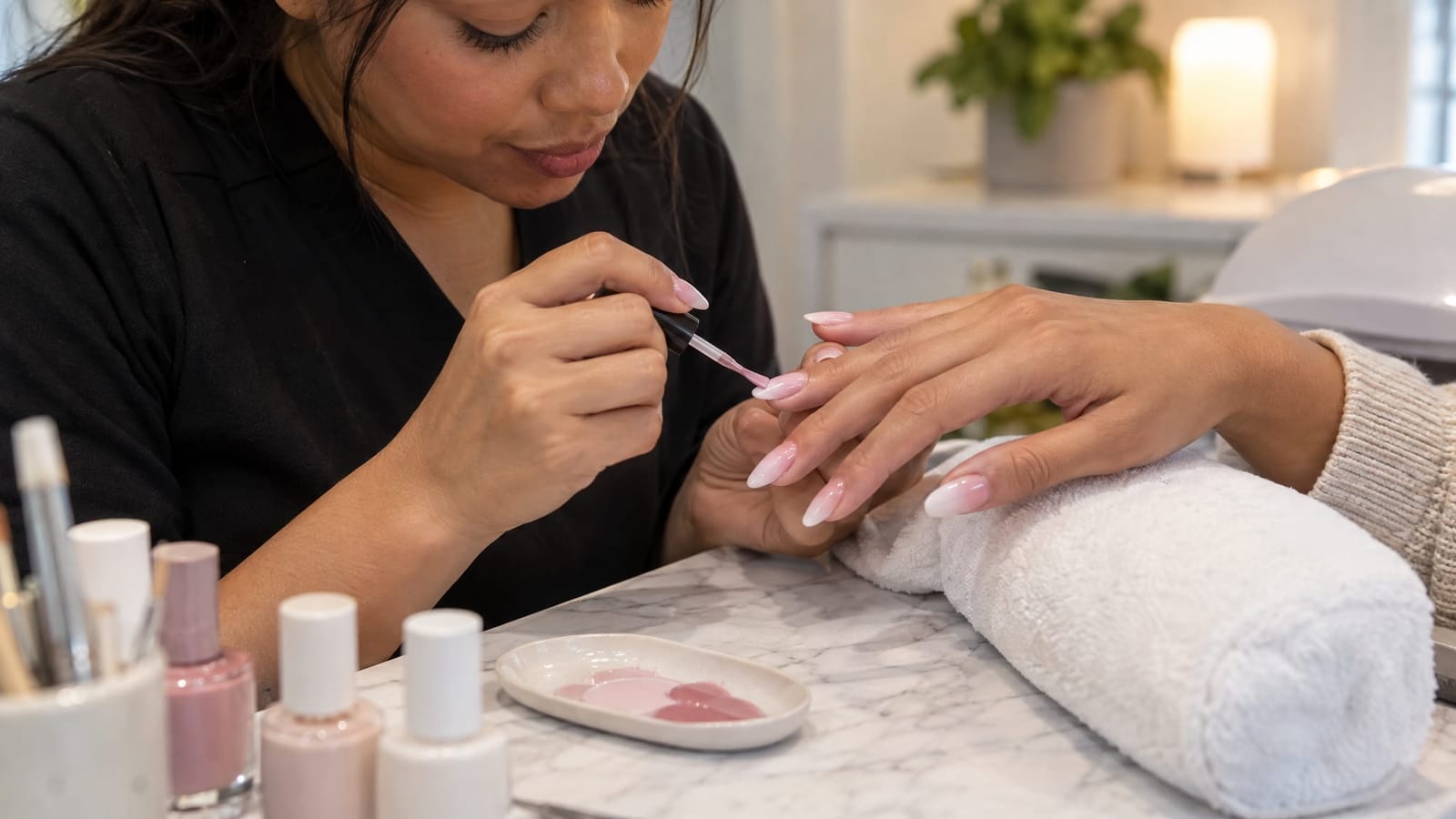
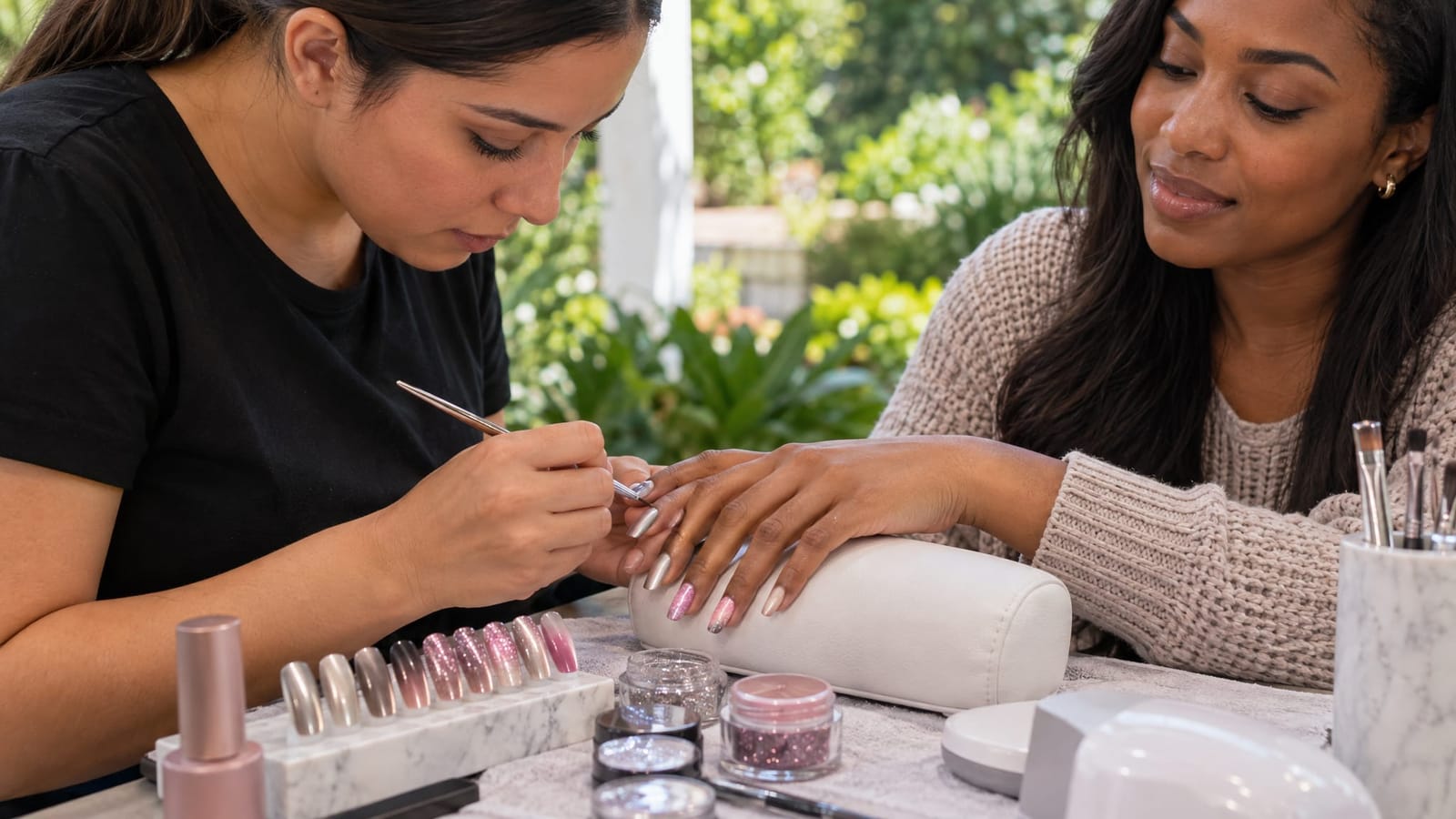
Ombre creates its detail through the transition itself. A pink-to-white fade gives a different impression from a sharply defined French tip, even when the colors are similar. Nude fading into peach feels restrained, while blue blending into pink makes the color combination more noticeable.
The contrast between your shades matters more than the word “ombre.” Two closely related shades create a quieter effect. Colors that differ strongly in brightness or depth make the gradient more prominent. If you like the technique but worry about nails looking too dramatic, a short length and a low-contrast pairing are useful starting points.
Our selection of ombre nail color combinations can help you compare palettes rather than choosing the technique first and struggling to find colors afterward.
Solid color lets the shade do the work
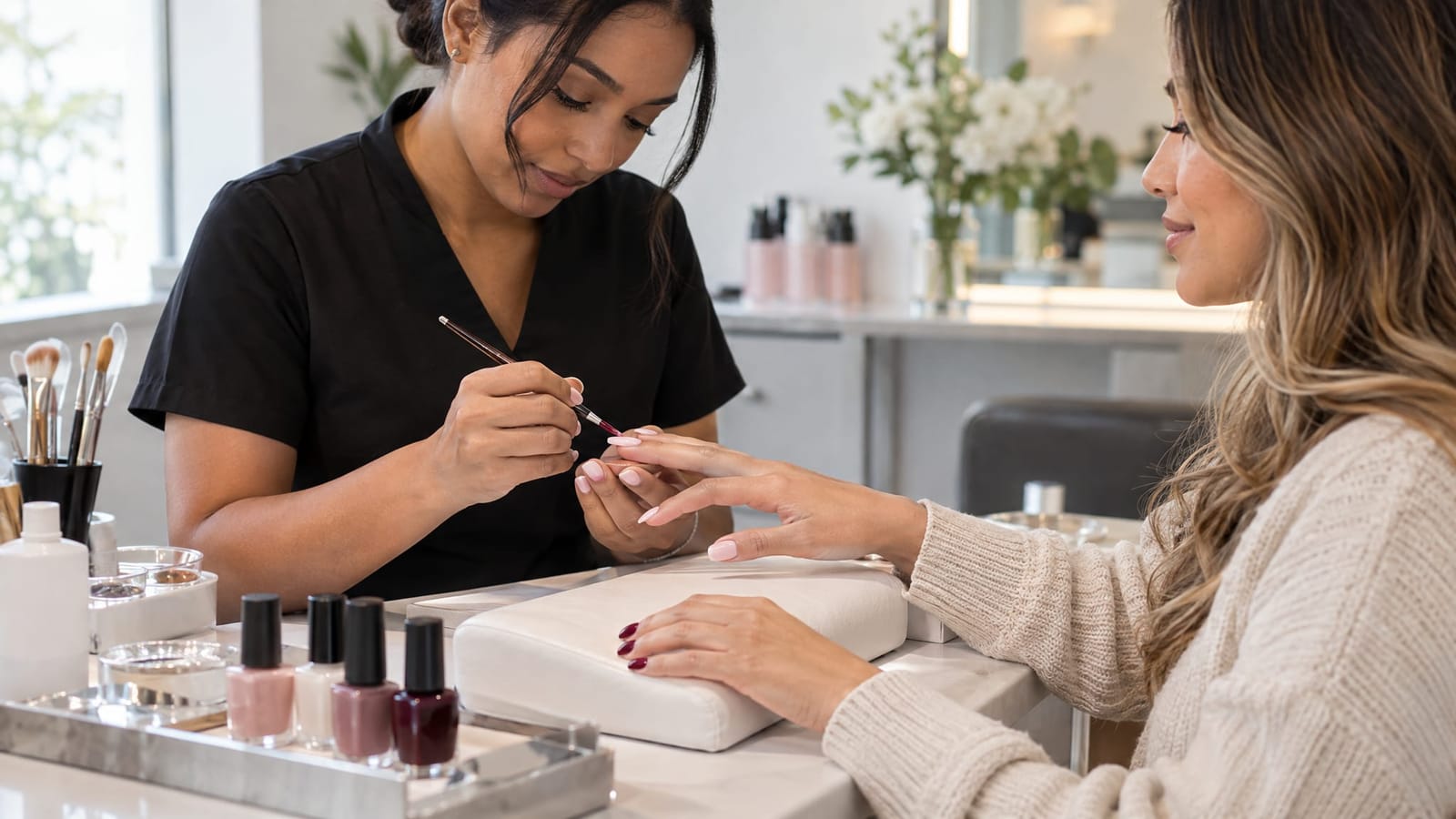
A solid manicure is not limited to basic neutrals. Burgundy, cobalt, creamy pink, and sheer beige each create a distinct look without needing a gradient. A single color also makes it easier to focus on the outline of the nail, whether that is rounded, square, or almond-shaped.
For an event, consider what role you want your nails to play. A single shade gives a consistent color statement. A soft gradient adds detail without a separate pattern. For wedding styling, ombre bridal nails offer another way to use a neutral palette alongside your preferred length and shape.
Nail Length: Both Work on Short Nails
Ombre does not require extensions. What changes with length is the space available for the transition. On a short nail, the fade needs to fit into a smaller area. A simple two-shade design keeps the idea clear without crowding the nail with several distinct color changes.
Longer nails provide more room for a gradual blend and a more visible tip color. That can suit a dramatic gradient, but extra length is a style choice, not a requirement for getting the effect.
Solid color is straightforward across different lengths because there is no transition to position. It can be especially appealing when you want to keep short nails visually simple or make a sculpted shape the main feature.
It also helps to separate the design from the structure underneath it:
- Ombre or solid color describes the visual finish.
- A manicure on natural nails or a set of extensions describes the foundation and whether length is being added.
- Gel or acrylic describes the product system, not a requirement to choose one particular look.
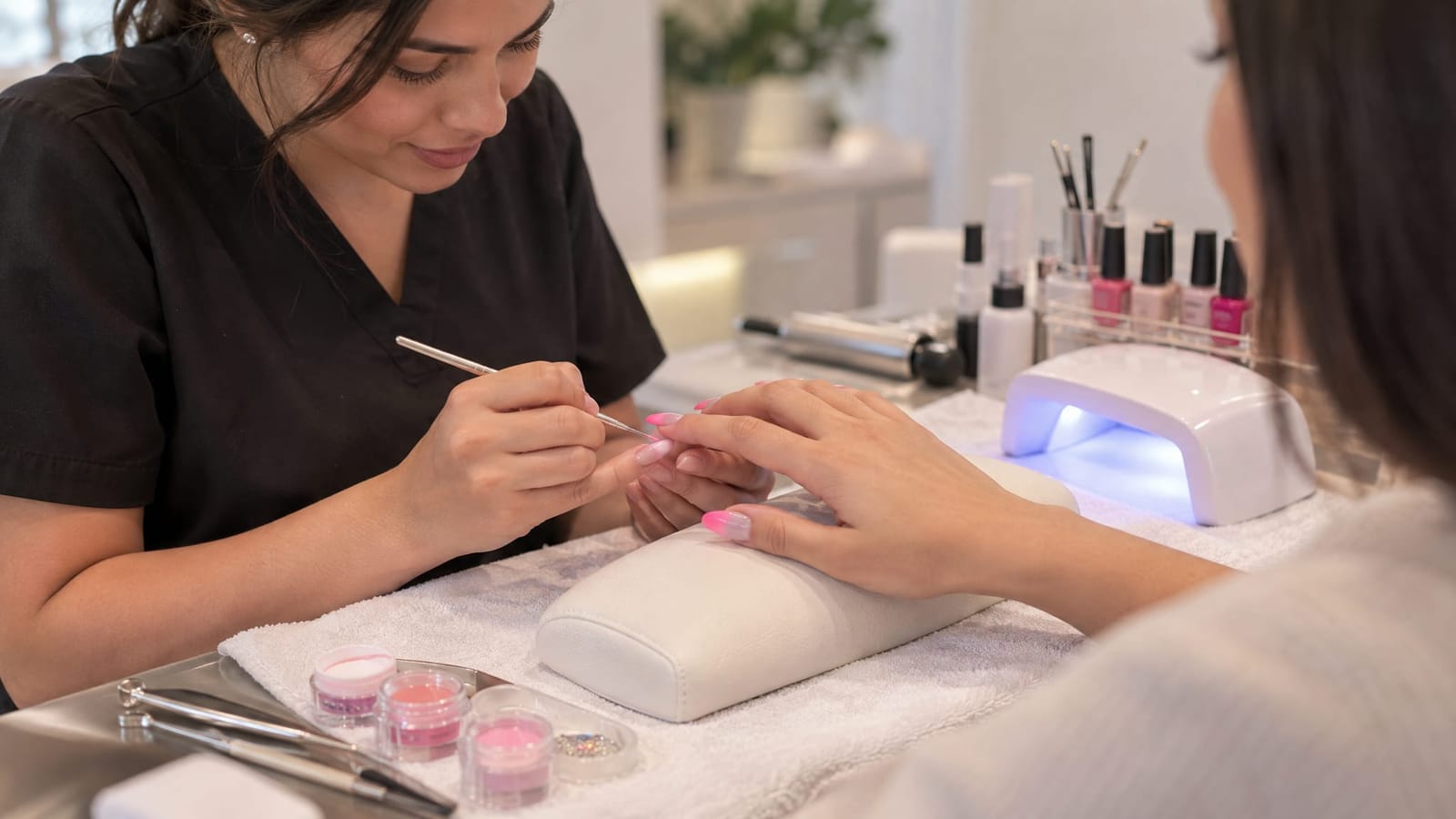
If you are considering acrylics, the ombre acrylic nails technique is worth understanding because the gradient can be part of how the set is constructed, rather than simply a color choice added at the end.
Budget and Appointment Time: Compare the Whole Service
For a fair comparison, keep the underlying service the same. Compare solid color and ombre at the same length, with the same product and the same removal needs. Otherwise, a difference caused by extensions or removal can look like a difference caused by the finish.
Solid color generally involves less decorative work than a blended design. Ombre adds the work of arranging the shades and smoothing the transition. Additional hand-painted art, glitter placement, or embellishments adds another layer of detail. A simple gradient and a heavily decorated ombre set are different requests.
If budget is the deciding factor, separate the essentials from the extras. Perhaps you want the gradient but do not need rhinestones. Or perhaps your priority is a particular shape, with one solid shade keeping the design straightforward. This makes the comparison more useful than treating all ombre sets as one category.
Does choosing ombre mean needing a different appointment window?
Not automatically. The complete service determines the time needed, including removal, length, shaping, repairs, and decoration.
At NailzByDelz Corp in Spokane Valley, we offer ombre nails, manicures, gel manicures, acrylic nails, and custom nail art. Speed and sculpting technique are part of our approach, but efficient work does not make every design identical in appointment length. Both understated solid finishes and blended looks belong in the conversation when planning a set.
For a narrow time window, a single color is the simpler design request. A two-color ombre without additional artwork keeps the design more focused than a gradient layered with several decorative elements. When considering same-day ombre nail appointments in Spokane, the relevant question is whether the appointment accommodates the complete service, not just the color application.
Maintenance: The Base Color Matters More Than the Label
Grow-out depends on contrast near the cuticle
Ombre does not automatically hide new growth. A dark, opaque shade at the cuticle can create a noticeable boundary as the nail grows, even if it fades to a pale tip. A sheer or natural-looking shade near the cuticle creates a softer visual transition.
The same principle applies to solid color. A sheer pink solid manicure can look less contrasting at the base than a deep red ombre. If visible grow-out is your main concern, compare the cuticle-area shades rather than choosing ombre solely for maintenance reasons.
Wear depends on more than the design
A gradient is a color effect, not a durability category. The product system, application, length, and everyday wear all matter. Switching from solid color to ombre does not, by itself, make a manicure stronger or longer-lasting.
Restoring the appearance of a damaged finish also involves different matching work. A solid color needs a consistent shade match. An ombre finish needs the color and transition to look continuous again. How much of the finish needs reworking depends on where the damage is and how the design was created.
For everyday upkeep, both styles benefit from avoiding using nails as tools and keeping the length manageable for your routine. The practical care commitment comes more from the overall set than from whether it has one color or a fade.
Which Choice Fits Your Routine?
Use your daily activities and personal preferences to narrow the decision:
- You type frequently or prefer compact nails: Start with a comfortable short length. Choose solid color for a uniform finish or a close-toned ombre for subtle detail.
- You enjoy a coordinated, understated look: Compare a sheer solid shade with a soft neutral gradient. Both can stay visually quiet without feeling identical.
- You want your nails to be the main accessory: A saturated solid color creates a strong statement. A contrasting ombre makes the interaction between two shades the feature.
- You like changing colors often: Solid color makes each new choice straightforward. Ombre suits the days when you want to explore a pairing rather than a single shade.
- You are undecided: Solid nails with an ombre accent offer a middle ground. The number and complexity of accent nails still matter when planning the design.
Before the appointment, define four things: your preferred length, your product or extension choice, the colors you want, and any existing product that needs removal. A reference photo is most useful when you can identify what appeals to you, such as the pale base, the amount of tip color, or the softness of the blend.
The best choice is not the more elaborate one. Solid color puts one shade in focus; ombre makes the transition between shades part of the design. Choose the detail you genuinely enjoy, then keep the length and overall service aligned with your routine.