What Is Ombre on Nails? A Beginner's Guide to the Gradient Look
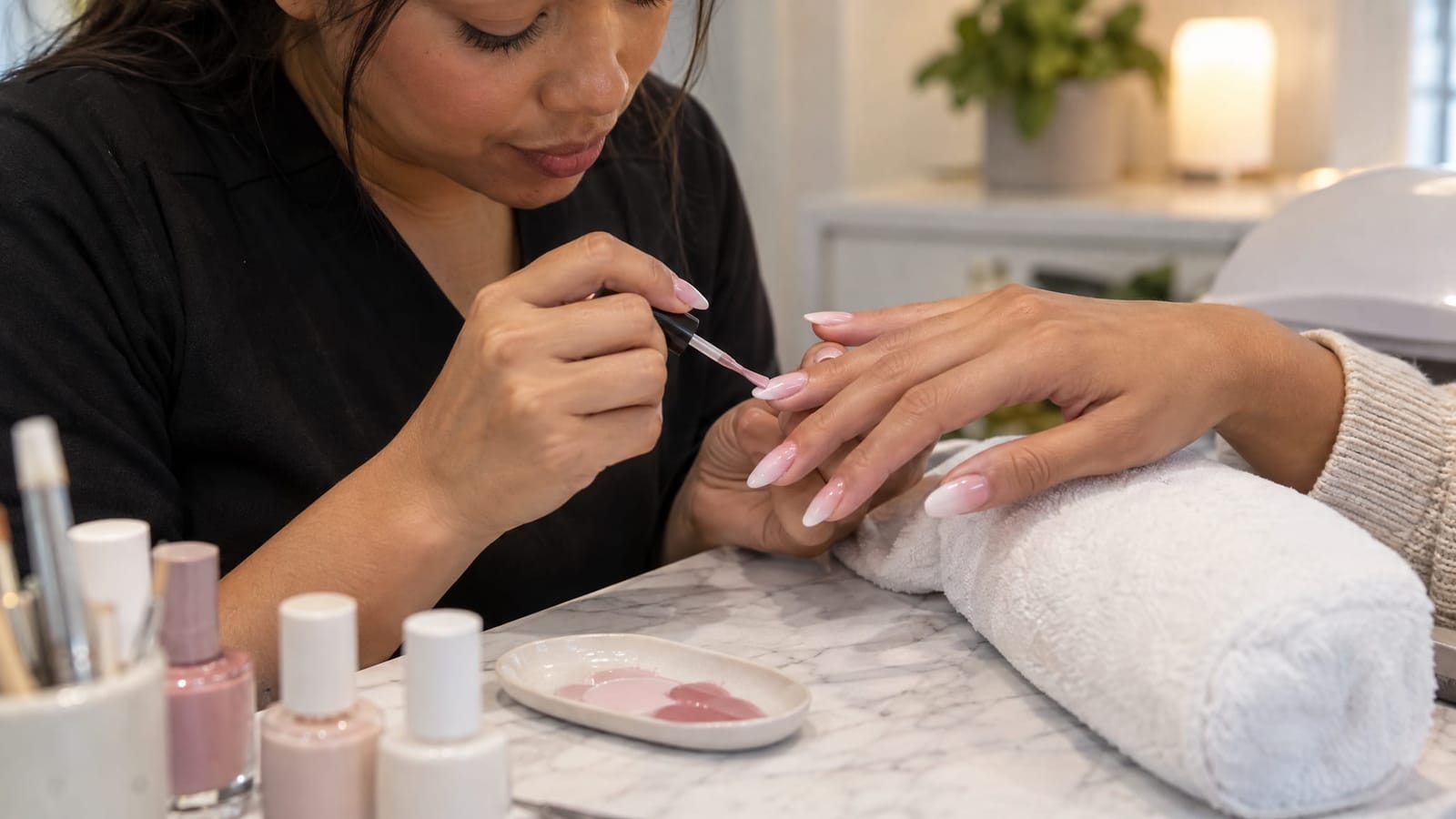
Ombre on nails is a color effect where one shade gradually blends into another, without a sharp dividing line. Picture a soft pink base fading into a milky white tip, or pale lavender deepening into purple. The transition, rather than any particular color, is what makes the look ombre.
Ombre is a design, not a specific type of nail product. It can be created with regular polish, gel color, or colored acrylic. You can wear it on short natural nails or longer enhancements, and it can look understated or bold depending on the colors and placement you choose.
What Makes Ombre Different From Solid Polish or French Tips?
A solid-color manicure uses the same shade across the nail. An ombre manicure introduces a gradual change in color or coverage. Instead of seeing exactly where one shade stops, you see a softly blended area between them.
The distinction is especially easy to see with pink and white:
- Solid polish: The whole nail is pink or white.
- Classic French manicure: A pink or natural-looking base meets a clearly defined white tip.
- French ombre: The pink base fades into white, softening the boundary between the two.
Ombre does not have to run from light to dark. Two different colors, such as peach and pink, can blend together too. The essential feature is the gradual transition.
How Is the Ombre Effect Created?
There are several ways to create a gradient. The main difference is whether the color is applied over the nail surface or built into an enhancement.
Regular polish: a blended surface design
With traditional nail polish, colors can be dabbed onto the nail using a small sponge. Overlapping layers soften the join, and a top coat helps smooth the finish. This creates the look without requiring gel or acrylic, although the polish still needs time to dry.
Gel color: blending before curing
Gel ombre uses gel colors blended with tools such as a brush or sponge. The layers are cured, or hardened, under a nail lamp. Gel color can create an ombre finish on natural nails or over an enhancement, so choosing gel does not automatically mean adding length.
Acrylic: blending color into the enhancement
Colored acrylic powders can create a fade as the nail enhancement is formed. A pink-to-white blend is one example. This differs from painting an ombre design over a finished acrylic nail: the color is part of the enhancement itself.
That distinction matters if you enjoy changing designs. Switching a surface color is different from changing a blend built into the acrylic.
How to Choose Your First Ombre Look
You do not need to know which blending tool to request. Start with the visible details that determine how the finished nails will look.
-
Choose subtle or high contrast.
Related shades, such as blush and rose, create a softer transition. Colors that differ more strongly, such as pale pink and deep burgundy, make the gradient more noticeable.
-
Choose where the fade goes.
A base-to-tip fade moves along the length of the nail. A side-to-side fade moves across it. A reference photo is useful because people sometimes use “vertical” and “horizontal” differently when describing nail designs.
-
Choose a comfortable length and shape.
Short nails can carry an ombre design. They simply provide less space for multiple color transitions. Two shades are a straightforward starting point, while longer nails offer more room for an extended blend.
-
Decide whether the gradient needs extras.
Ombre can stand alone. Glitter, a painted accent, or another detail changes the overall effect. If you want the fade to remain the focus, keep additional artwork limited.
For a quiet everyday look, consider a sheer beige base fading into milky white tips on short, rounded nails. For a more colorful version, a lavender-to-plum blend adds contrast without requiring extra decoration.
How Ombre Fits Into Our Nail Services
At NailzByDelz Corp in Spokane Valley, we offer ombre nails, gel manicures, acrylic nails, sculpted nails, nail extensions, and custom nail art. We also offer regular manicures and French manicures, so your style does not need to be long or dramatic.
These service names describe different parts of a manicure. Ombre describes the color effect. Gel and acrylic describe products used for the finish or structure. Extensions describe added length, while custom nail art describes decorative design.
When describing the look you want, separate the design from the structure: your preferred colors and fade, then whether you want to keep your natural length or add length. That is more useful than treating “ombre” as a complete description of the nail service.
Beginner Questions About Ombre Nails
Is a different color on every finger the same as ombre?
A sequence of shades across the hand is often called a gradient manicure. Ombre usually refers to colors blending within each individual nail. Since the terms sometimes overlap, a photo or a description of where the colors change helps communicate the difference.
Does ombre last longer than a solid color?
The gradient itself does not determine how long a manicure wears. The underlying product, application, nail growth, and everyday use matter more than whether the finish is blended or solid. Choose ombre for its appearance rather than an expectation of longer wear.
Does ombre take longer to apply?
Blending adds a design step compared with applying a single solid color. Existing product removal, added length, shaping, and extra artwork also affect appointment time. A simple two-color fade and a detailed extension set involve different amounts of work.
A Simple Starting Point
Ombre is a softly blended color transition, not a commitment to long nails or a dramatic style. For your first set, focus on two colors you enjoy, a clear fade direction, and a length that fits your daily routine. Those choices give the design its character.