Ombre Nails on GelX: Getting a Gradient on Extensions
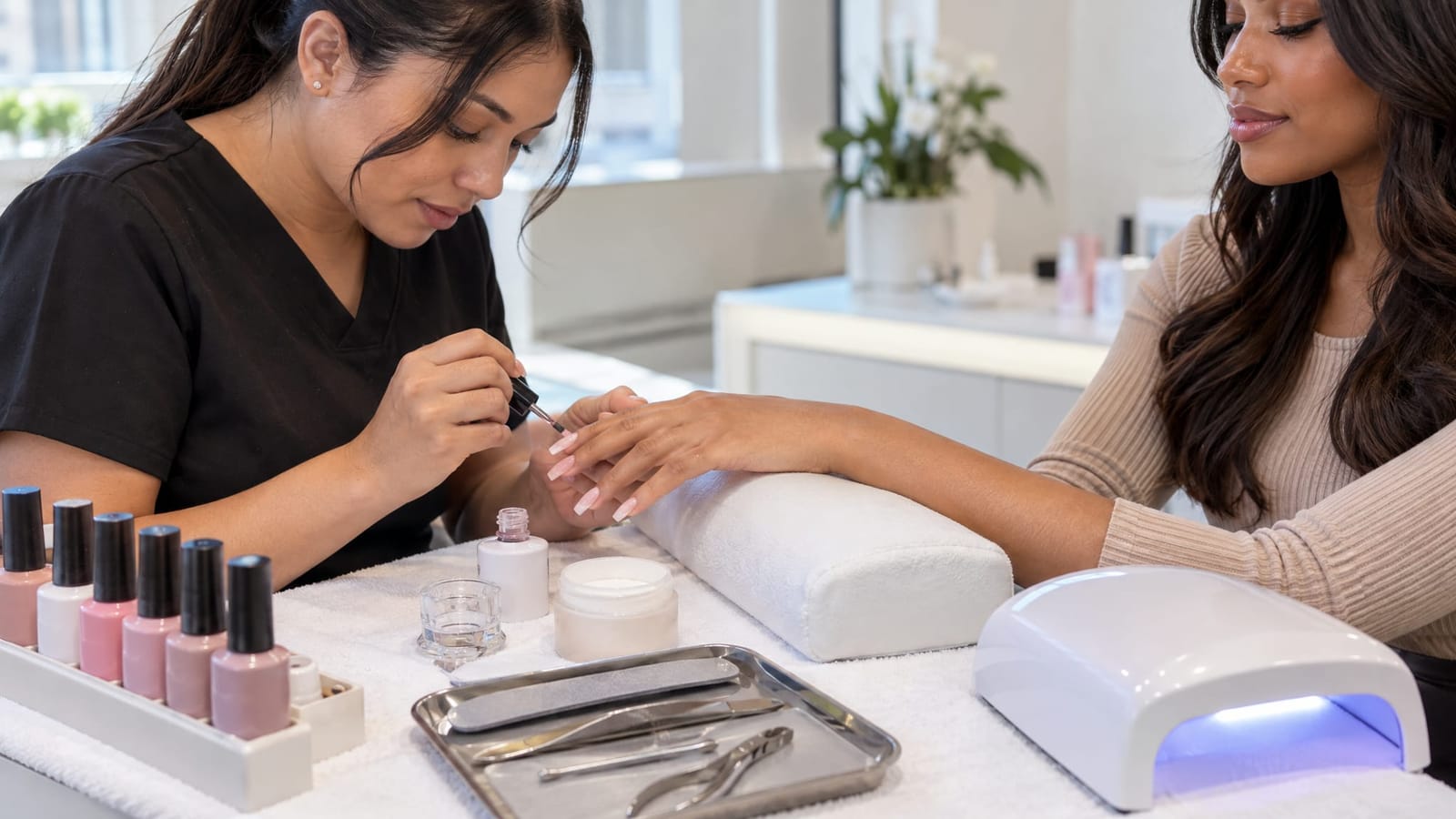
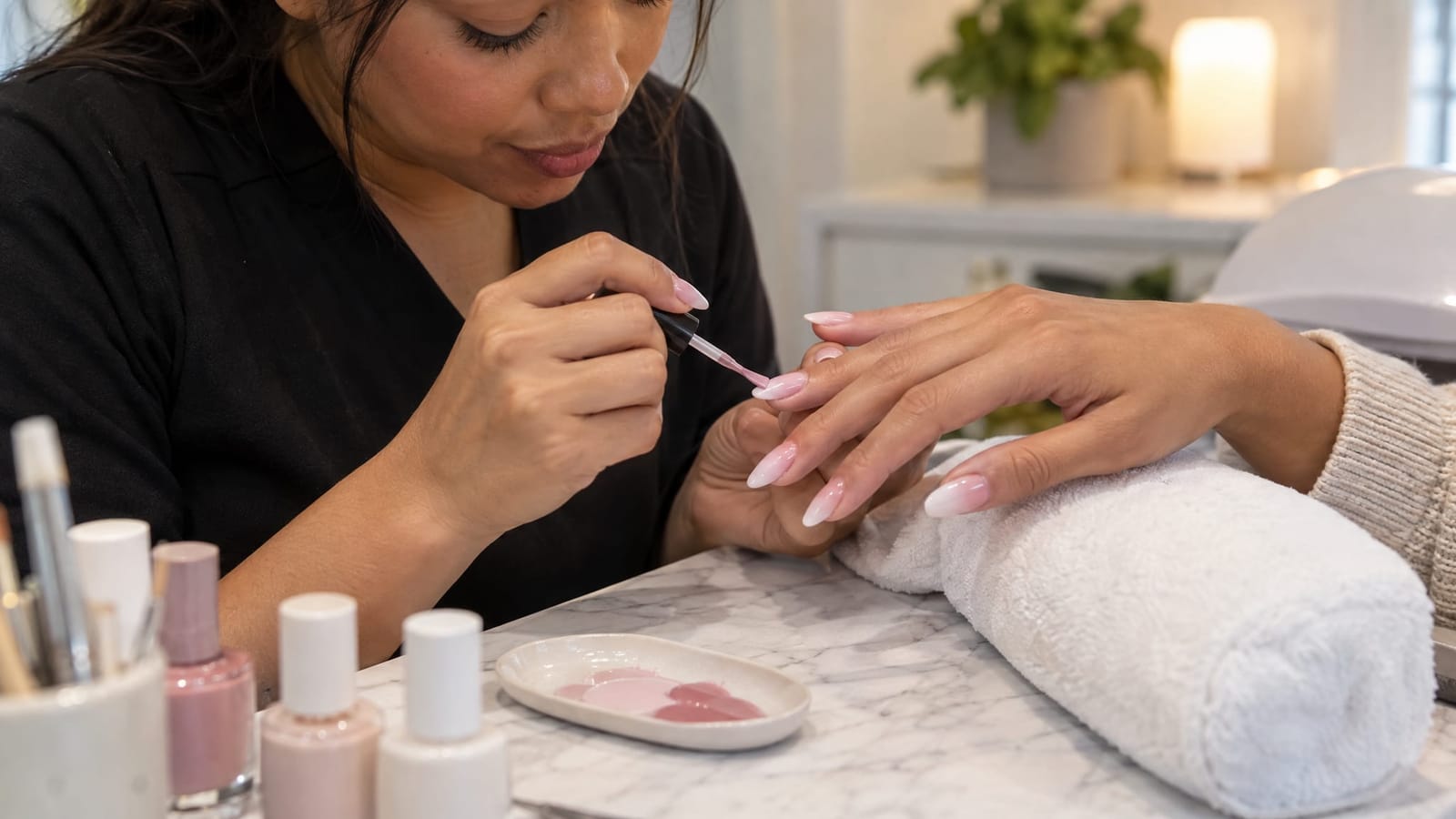
Ombre GelX nails get their gradient from color blended over a full-cover soft gel extension. Gel polish creates a soft fade, chrome powder adds a reflective transition, and detailed brushwork gives more control over multicolor designs. The extension provides the length and shape; the artwork creates the ombre.
Acrylic ombre can look similar, but the color may be built into the extension itself using different shades of acrylic. That distinction matters when choosing a design, changing colors later, and planning maintenance. Neither extension type automatically produces a better gradient. The best match depends on the finish you want, how you use your hands, and how you prefer to maintain your nails.
1. Choose the Gradient Before Choosing the Extension
Start with the effect you want rather than the product name. “Ombre” describes a gradual color transition, not one particular nail material or application method.
These details make the biggest difference to the finished look:
- Color contrast: A sheer pink fading into milky white looks softer than a deep blue fading into pale pink. Strong contrast makes the transition more noticeable.
- Fade placement: Color can build toward the tip, deepen near the base, or move from one side of the nail to the other.
- Transition width: A broad fade looks misty and gradual. A narrow transition gives the design more definition.
- Coverage: A sheer base lets some of the nail beneath remain visible. An opaque base creates a more solid backdrop.
- Finish: Gloss, shimmer, and chrome change how the gradient catches the light.
For a subtle everyday look, consider a close color pairing with a broad transition. For a statement set, stronger contrast or a reflective tip makes the fade more prominent without necessarily adding length.
2. Understand What the Gel-X Tip Does
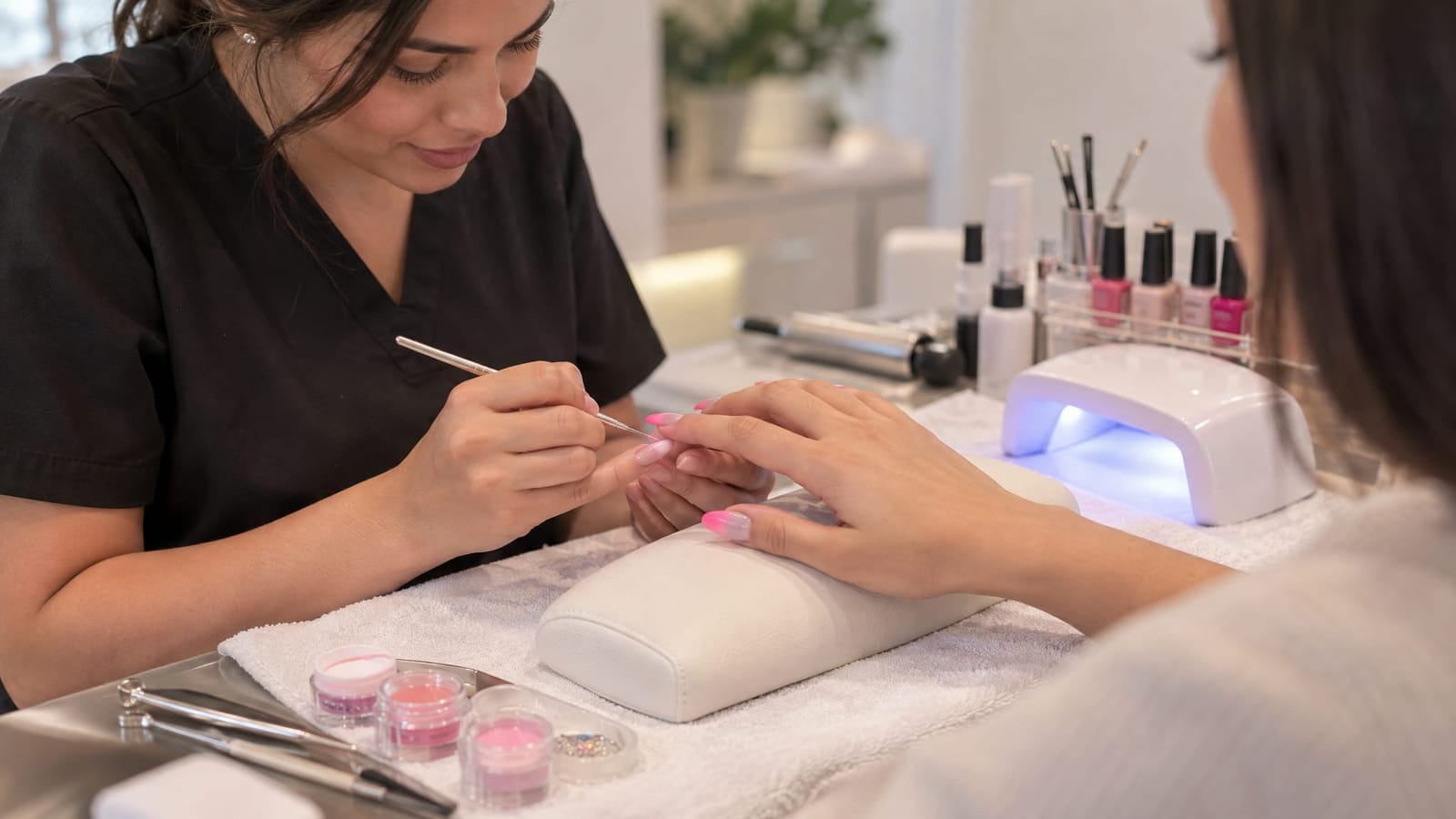
Gel-X is a full-cover soft gel extension system. A preformed tip covers the natural nail and extends beyond it, with a gel attachment product cured under a compatible lamp. Unlike a sculpted acrylic extension, the tip already has its basic shape and length.
The gradient usually sits on top of that extension as a decorative finish. This separates two decisions that reference photos can make difficult to distinguish:
- Structure: The extension’s fit, length, shape, and profile.
- Design: The colors, blending method, and surface finish.
A beautifully blended fade cannot compensate for a poorly fitted extension. During a professional application, tip selection and preparation come before the artwork. The tip needs to suit the nail’s width and curve without being forced into place.
Short extensions can carry ombre just as well as long ones. A shorter nail simply gives the artist less space for the transition, making thoughtful color placement especially important.
3. Match the Ombre Technique to Your Desired Finish
Blended gel polish for a soft color fade
For a classic gel-polish ombre, the artist applies a base shade and introduces a second color across the transition area. A brush or sponge-style applicator can soften the boundary, with thin layers building the effect.
The goal is to avoid a visible stripe where the shades meet. Thin applications also help control bulk at the tip. Gel layers are cured according to the product system’s instructions before the design is finished and sealed.
This approach suits pink-to-white fades, coordinated pastel shades, and many two-color designs. Closely related colors tend to blend visually with less contrast. Opposing colors require more deliberate placement to avoid a muddy-looking middle.
Chrome powder ombre for a reflective transition
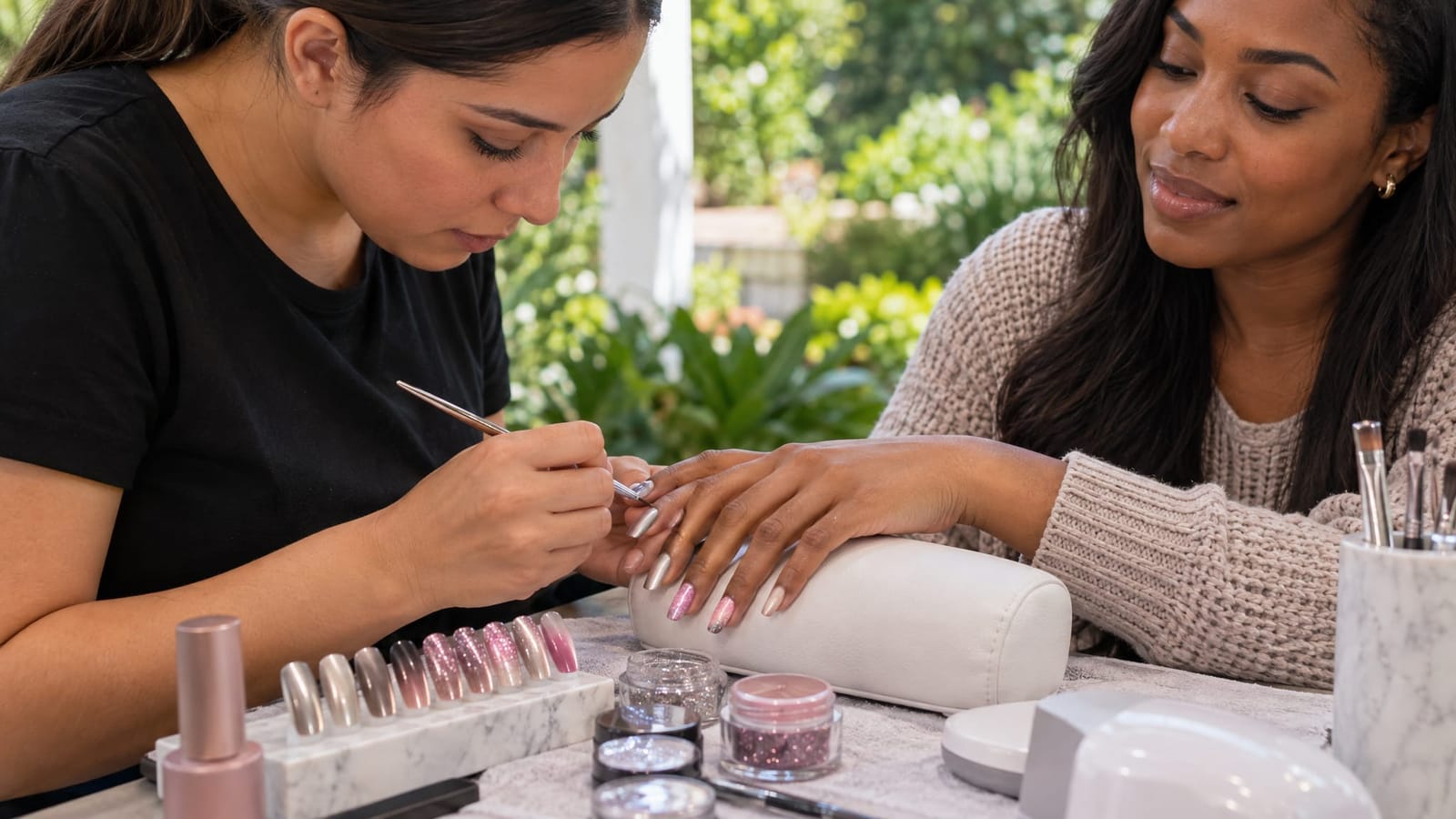
Chrome ombre uses a reflective powder over a prepared surface. Instead of covering the entire nail evenly, the artist concentrates the effect in one area and reduces it across the transition. The underlying polish color remains part of the design.
A silver chrome tip over a sheer pink base creates a different result from silver chrome over opaque black, even when the powder placement is similar. For reference photos, pay attention to both the base shade and the reflective finish.
Chrome also behaves differently under changing light. Its reflection can make a fade appear sharper from one angle and softer from another. Choose it for shine and dimension rather than expecting the same appearance as a flat, painted gradient.
Layered brushwork for more controlled placement
Gel-polish blending is itself a painted technique. More detailed painted gradients use deliberate layers and brushwork to control where individual shades begin and end.
This is useful for a sideways fade, several colors across one nail, or a gradient that forms the background for linework or floral art. It also allows the transition to be adjusted nail by nail when the design needs consistent placement.
More colors are not automatically better. Two well-chosen shades can create a cleaner result than several competing colors squeezed into a short nail.
4. Compare Surface Ombre With Acrylic Ombre
The important comparison is not simply “gel versus acrylic.” It is also whether the color is painted over the structure or incorporated into it.
| Decision | Ombre over Gel-X extensions | Ombre with acrylic extensions |
|---|---|---|
| How the fade is made | Usually created with polish, powder effects, or painted artwork over the tip. | Can be blended from colored acrylic during construction or painted over the finished acrylic. |
| How shape is established | Begins with a preformed full-cover tip, followed by refinement. | Can be built and shaped with acrylic, including sculpting over a form. |
| Changing the design | A surface design is separate from the extension, although changing it still requires careful product removal. | Painted color is separate from the structure. Color built into acrylic involves more structural work to change. |
| Planning upkeep | The appointment plan follows the soft gel system and condition of the set. | Acrylic is commonly maintained with fills, with additional work when the shape or built-in gradient needs adjustment. |
If you enjoy switching between chrome, pastels, and detailed artwork, a surface-painted gradient keeps those design decisions separate from the structural material. That option exists on both Gel-X and acrylic.
If you prefer a pink-and-white fade formed within a sculpted extension, acrylic ombre offers that approach. The tradeoff is that changing the underlying colors is not simply a polish change.
5. Choose Length and Shape Around Your Routine
For everyday wear, length and shape deserve as much attention as the extension system. Longer nails create more leverage when they catch or press against something. A pointed tip also feels different during daily tasks than a rounded or softly squared edge.
Use your routine to narrow the design:
- Frequent typing: A shorter length can make keyboard contact easier to manage while still leaving room for a soft fade.
- Hands-on work: A compact shape and smooth finish reduce opportunities for long tips or raised decorations to catch.
- Regular style changes: Surface-painted ombre keeps the artwork distinct from the underlying extension.
- A special-event look: Extra length gives a multicolor transition more space, but it also changes how the nails feel during everyday tasks.
For example, a short rounded set with a sheer pink-to-white fade keeps the design understated. A longer almond set with a blue-to-pink gradient and chrome tips makes the color transition more visible. Both can be elegant; they simply prioritize different things.
No extension type makes length irrelevant. Choosing acrylic solely because it is perceived as stronger does not remove the practical demands of wearing a longer set.
6. Prepare a Clear Appointment Description
For Spokane-area appointment planning, separate the look you want from assumptions about how it was made. A photo may show an acrylic gradient, painted soft gel extensions, or another technique without identifying the material.
A useful appointment description includes:
- The desired length and shape.
- The base and tip colors.
- Whether you want a sheer or opaque finish.
- Whether the fade is painted, reflective, or paired with other artwork.
- What product is currently on your nails and whether removal or repairs are part of the visit.
At NailzByDelz Corp in Spokane Valley, we offer ombre nails, acrylic nails, gel manicures, nail extensions, and custom nail art. Our sculpting technique supports customized shapes, while our hand-painted nail art can be as subtle as a single accent or as detailed as a full set.
Understand what changes the appointment scope
A simple two-color fade involves different work from a gradient with chrome, hand-painted details, and repairs. Existing product removal also adds a separate task. Comparing designs with the same length, finish, and removal needs gives you a more useful starting point than comparing photos alone. Our guide to ombre nail costs in Spokane explains the factors that affect pricing.
7. Maintain the Extension, Not Just the Color
Ombre may soften the visual transition between shades, but it does not prevent regrowth or replace maintenance. Both soft gel and acrylic extensions can chip, lift, or break.
Gloves during cleaning, avoiding using nail tips as tools, and leaving removal to an appropriate professional process help protect the set. Picking or peeling at the coating can disturb more than the painted design. A lifted area also needs attention rather than being disguised with another layer of color.
The most useful choice starts with the fade you love, then matches it to a comfortable structure and a realistic upkeep plan. Gel-X offers a preformed soft gel foundation for surface artwork. Acrylic adds the option of building the gradient into a sculpted extension. In either case, thoughtful color placement matters more to the ombre effect than the extension name alone.