Ombre Nails for Short Nails: Does the Gradient Still Look Good?
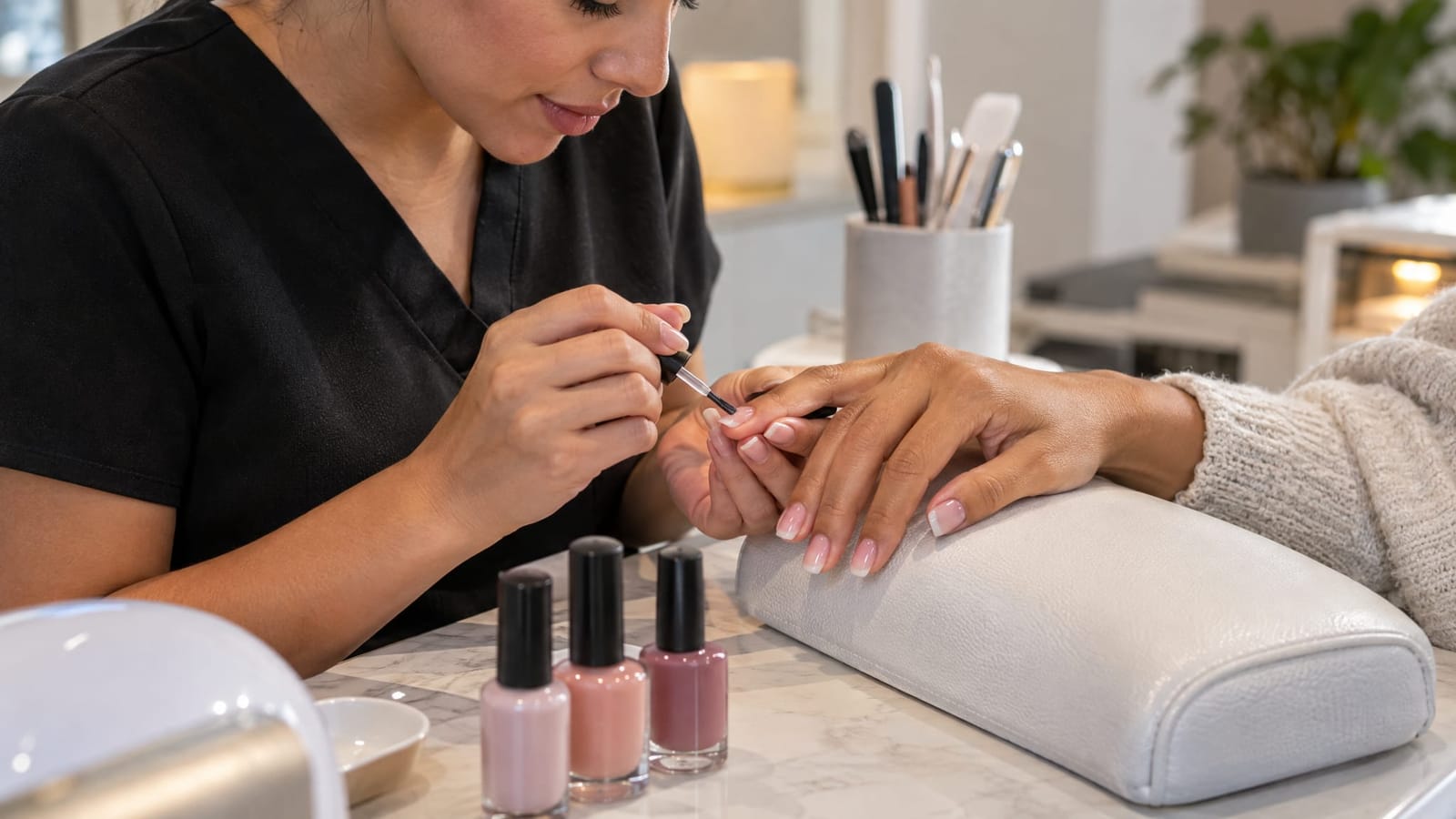
Yes, ombre nails can look beautiful on short nails. You do not need long extensions to get a noticeable, softly blended gradient. The key is choosing colors and placing the transition so the design fits the space available.
For a subtle look, try sheer pink fading into milky white. For more color, peach blending into coral or lilac fading into lavender can keep the transition soft without making the design feel crowded. Extensions are optional. If you want a little more room at the tip, a short sculpted extension can add that space without turning your manicure into a long set.
What Makes Ombre Work on a Short Nail?
Ombre is a gradual transition between colors, rather than a sharply defined line. On a short nail, the challenge is leaving enough room for that transition while keeping both colors visible.
These design choices help:
- Start with two colors. A simple pairing gives each shade room to show. Several distinct colors are harder to separate on a small surface.
- Give the blend room. Keeping one shade near the base and the other near the tip leaves the middle available for a gradual fade.
- Choose how much contrast you want. Similar shades create a gentle effect. Light-to-dark combinations look bolder and make the transition more noticeable.
A tip color does not need to cover half the nail. A small area of white or a brighter shade can still make the gradient readable. The aim is a soft change in color, not equal-sized blocks.
Color Pairings That Suit Short Ombre Nails
The most useful starting point is deciding whether you want a barely noticeable fade or a clearly colorful design. Neither requires extra length.
Sheer pink to milky white
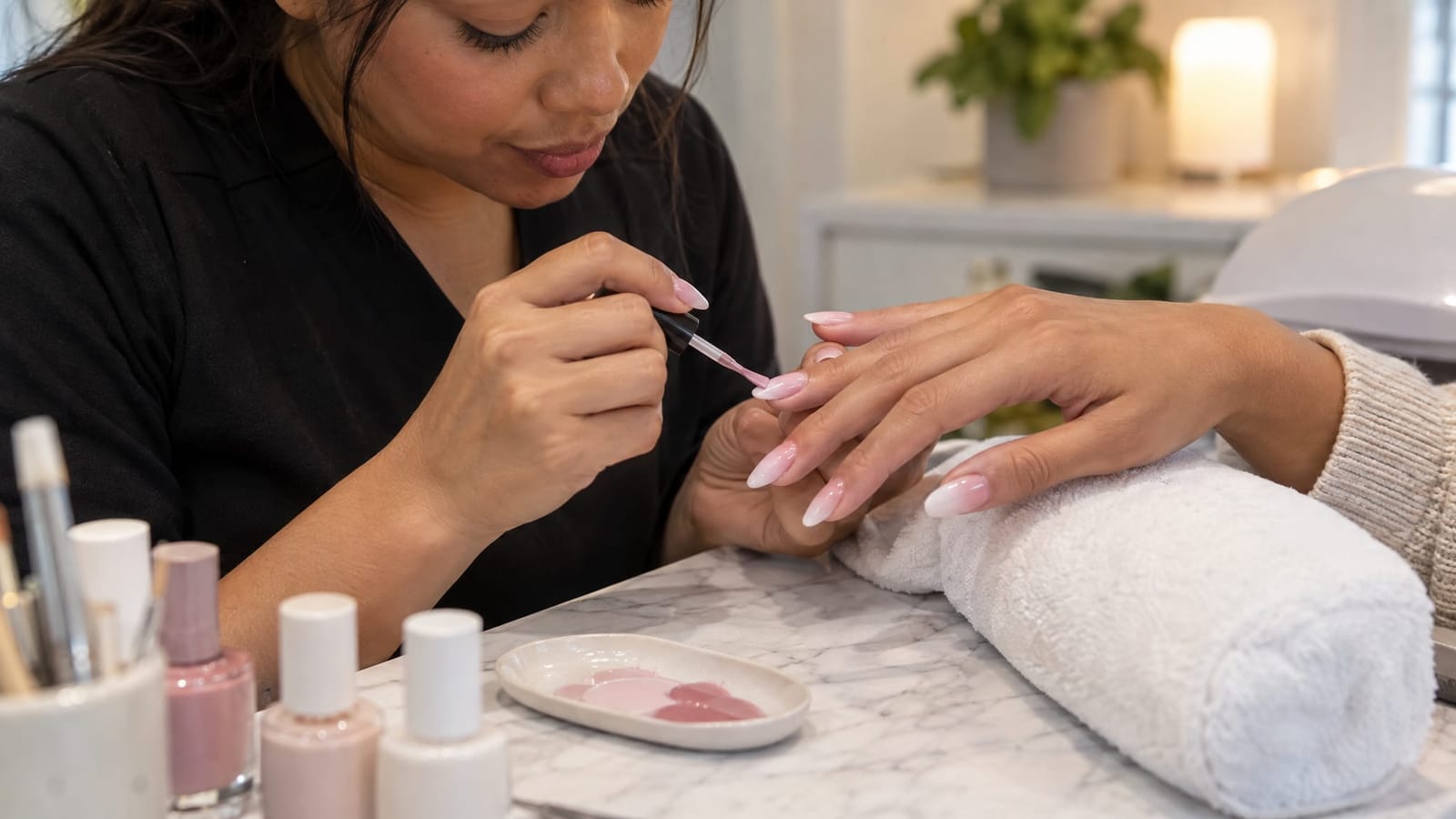
This creates a French-inspired ombre without the crisp smile line of a traditional French manicure. A translucent pink base and softly faded white tip are a good choice when you want a simple, polished finish. Keeping the white concentrated near the edge leaves more space for the blend.
Peach to soft coral
These neighboring shades give the nails warmth while keeping the transition gentle. Choose a lighter coral for a quieter look or a brighter coral tip when you want the color change to stand out.
Lilac to lavender
A pale lilac base fading into a deeper lavender offers color without a strong light-to-dark contrast. This pairing works well when you want the ombre visible but not the only thing someone notices.
Rose to berry
Dark colors are not off limits on short nails. A rose base with berry concentrated at the tips creates a richer look. Compared with white fading into deep burgundy, these closer shades make a softer starting point for a darker gradient.
Choose the Shape and Direction Together
Ombre can work with round, oval, square, or squoval nails. Squoval means a square outline with softened corners. There is no need to choose a sharply tapered shape just to make the gradient look intentional.
Round and squoval shapes are straightforward options when keeping the free edge, the part extending beyond the fingertip, short. A more tapered almond shape needs additional free-edge length to show its outline clearly.
The direction of the fade also changes the design:
- Base to tip: A familiar choice, especially for pink-and-white ombre. It places the color change along the length of the nail.
- Side to side: Uses the nail’s width for the transition, offering a different option when there is little length beyond the fingertip.
Choose the outline you enjoy wearing first, then adapt the gradient to it.
When a Small Sculpted Extension Helps
A short natural nail can carry an ombre design without added length. Sculpting becomes useful when you want a little more space for a distinct tip color or a shape that your current free edge cannot provide.
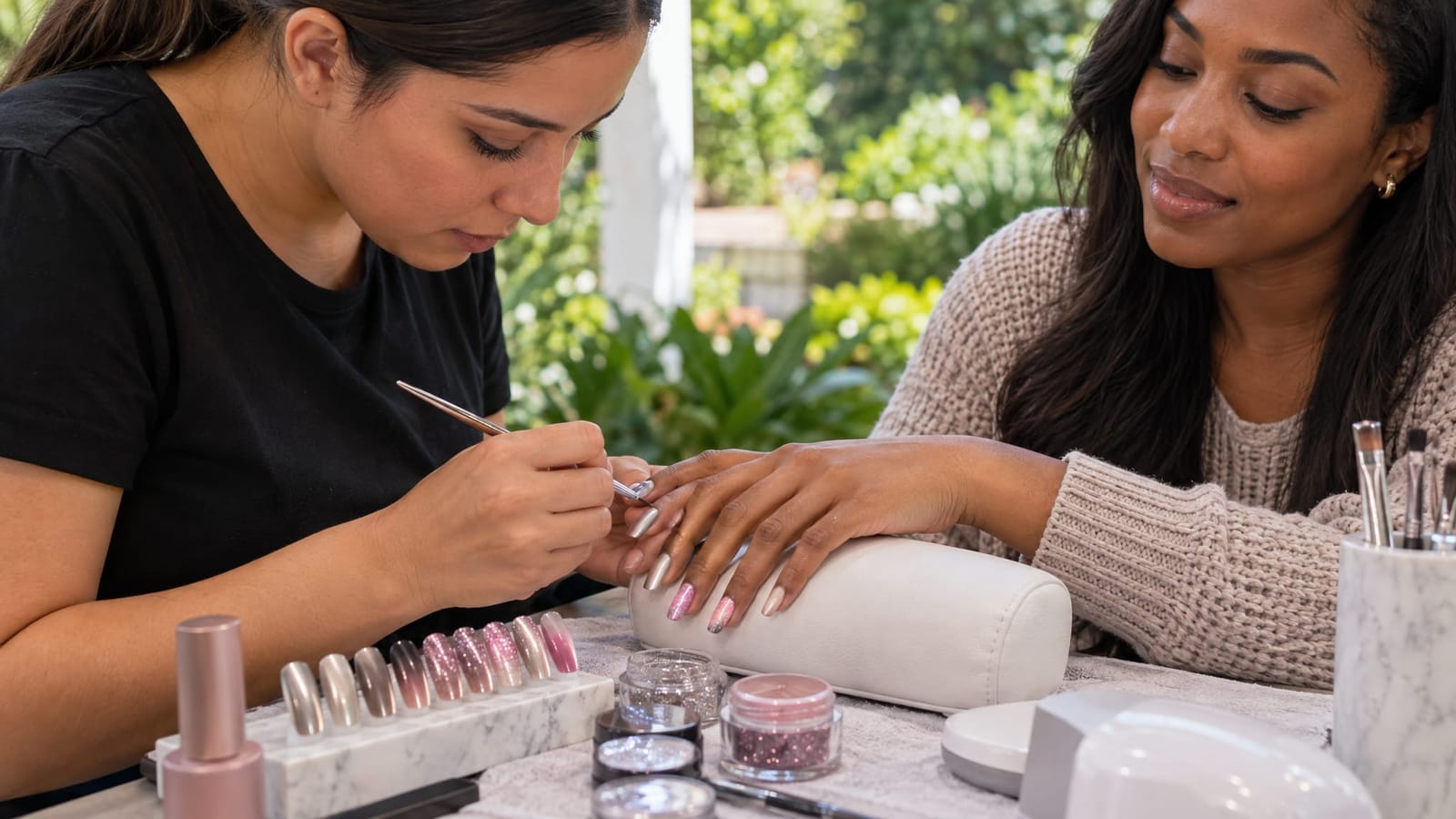
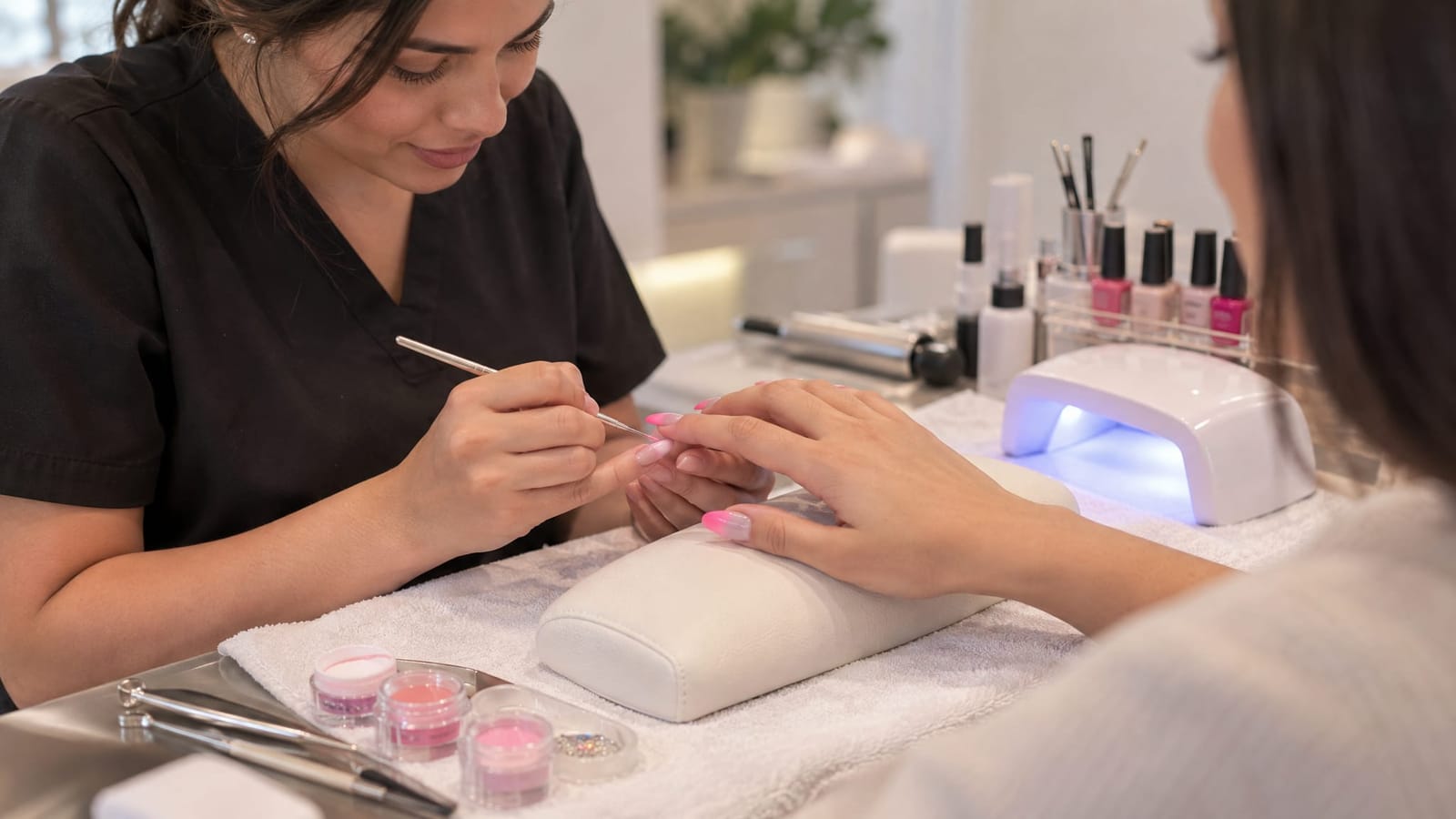
At NailzByDelz Corp in Spokane Valley, we offer ombre nails, acrylic nails, sculpted nails, and custom nail art. Our sculpting technique lets us build length and shape rather than rely on a one-size template. That added length can stay modest, giving the gradient more room while keeping the overall look short.
The distinction matters: ombre describes the color design, while acrylic describes the material used to build an enhancement. Choosing ombre does not automatically mean choosing acrylic or a dramatic set.
If your priority is keeping your current length, adapt the colors and fade to your natural nails. If your priority is a more defined tip or tapered shape, a small extension may better match that design.
Make Your Inspiration Photo Fit Your Length
A gradient shown on long nails often needs its proportions adjusted for a shorter set. Instead of copying the exact amount of each color, identify what you like most: the palette, the soft transition, the tip color, or the overall shape.
For example, a long pink-and-white design with a broad white tip can become a short squoval set with a narrower white area and a soft pink blend. The character of the design stays the same without squeezing every detail into less space.
Useful details to decide beforehand include your preferred shape, whether you want added length, and whether the fade should look subtle or clearly defined.
Frequently Asked Questions
Can short ombre nails include nail art?
Yes. A small painted detail or a single accent nail can complement the gradient. Leaving some nails without extra decoration keeps the fade visible, especially when the design already uses contrasting colors.
Does ombre look better glossy or matte?
Both create a different effect. Gloss adds reflective shine, while matte gives the colors a softer, nonreflective appearance. Choose the finish for the mood you want rather than treating either as necessary for short nails.
What if my nails are different lengths?
The blend can be adjusted to each nail rather than placed at an identical distance from every tip. Keeping the same color order and similar proportions helps the set look coordinated, even when the nail surfaces vary.
A Gradient Does Not Need Dramatic Length
Short ombre nails work best when the design suits the nail rather than imitates a longer set exactly. A thoughtful color pairing, room for the blend, and a comfortable shape can deliver the look without extra length. Sculpting is an option when it serves your design, not a requirement.