Nail Art on Gel Hard Overlay: Adding Art Without Acrylics
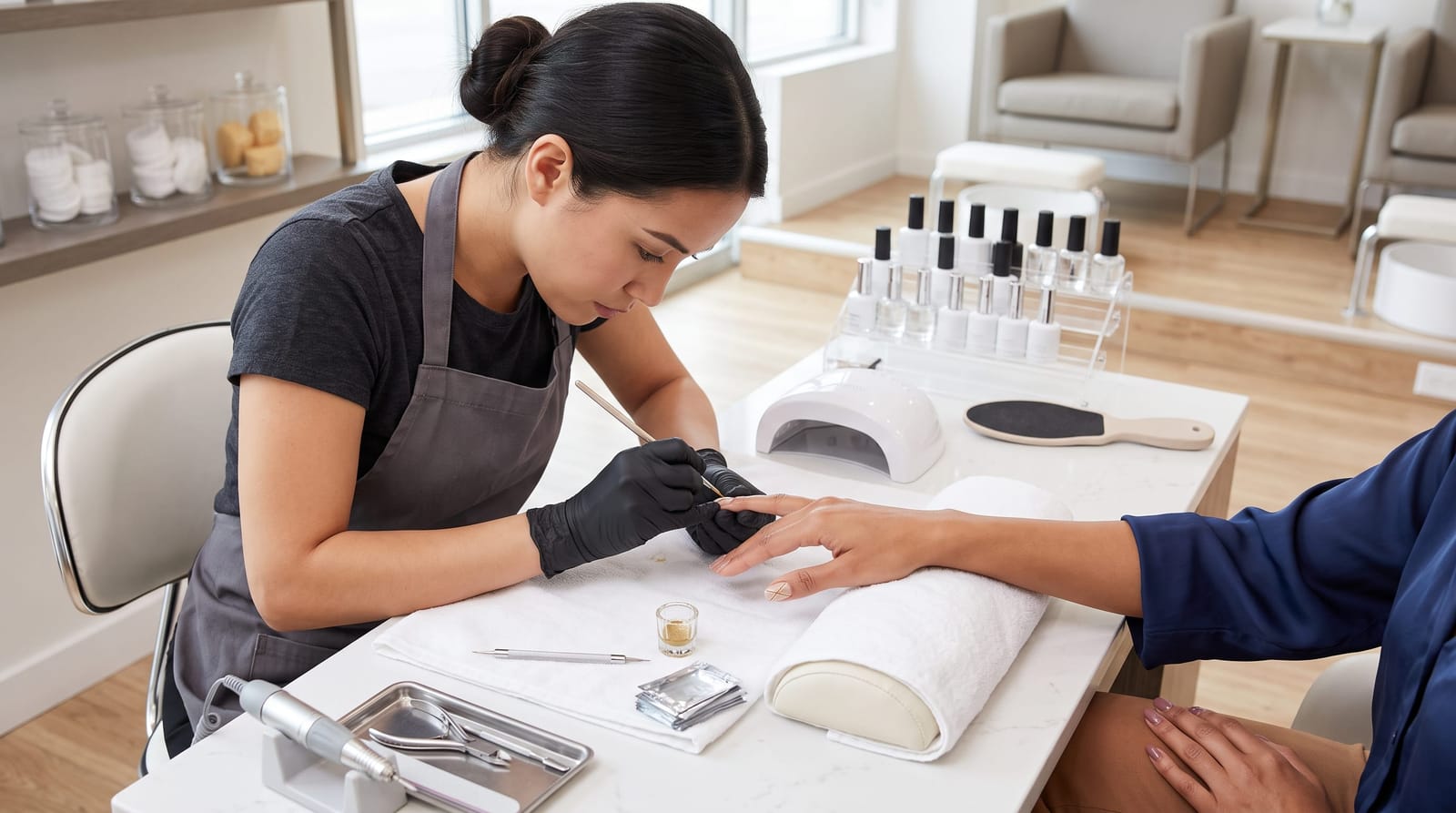
Yes, you can have custom nail art without an acrylic set. Nail art on gel hard overlay starts with a structured gel base over your natural nails, followed by color, painted details, or decorative finishes. The overlay provides the foundation; the artwork determines whether the finished look feels subtle, playful, or statement-making.
Often called a hard gel overlay, this service generally follows your existing nail length rather than adding extensions. That makes it an option worth discussing when you like the length of your natural nails but want a more structured finish with a personalized design.
Within the wider world of custom nail art in Spokane and Coeur d’Alene, overlays offer a useful middle ground: your own nail length, with room for creative expression. Here’s how the service works, which designs translate well, and what to clarify before booking in the Spokane Valley area.
What Is a Hard Gel Overlay?
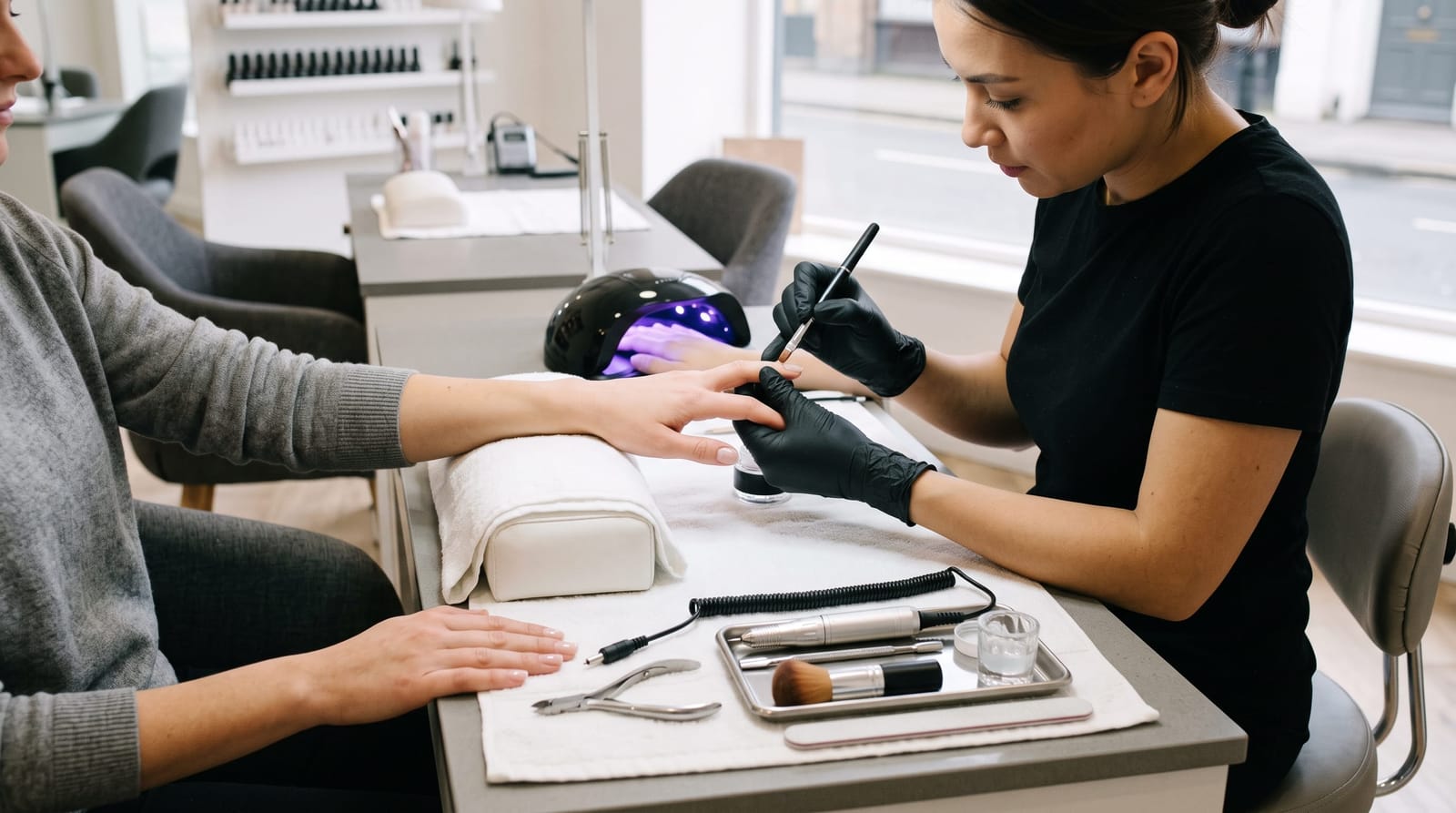
A hard gel overlay is a nail enhancement applied over the natural nail and cured under a compatible nail lamp. Unlike an extension service, an overlay does not need tips or forms to add length. Allure’s explanation of a hard gel manicure describes it as an overlay service intended to provide a sturdy enhancement without nail tips or forms.
The gel is shaped to create a balanced surface and defined nail outline. It is more than a layer of color, but it does not have to look dramatically thick or long. The finished appearance depends on the natural nail underneath, the product, and the way the structure is built.
Hard gel overlay versus gel polish
Gel polish primarily provides color and finish. A hard gel overlay provides a structured enhancement beneath that finish. An overlay can be left with a sheer appearance or used as the foundation for compatible color products and artwork.
Booking language matters here. “Gel manicure,” “builder gel,” and “hard gel overlay” are not always used to describe the same service. Product names alone may not explain what is included, so it helps to ask whether the appointment involves a structured overlay, color, and custom art.
Hard gel overlay versus acrylics and extensions
Hard gel and acrylic are different enhancement systems, but both can serve as a canvas for custom designs. The choice is not simply “natural-looking gel” versus “bold acrylic.” Either can be styled subtly or expressively.
The more useful question is whether you want to keep your current length or add length. If your inspiration depends on a long, tapered shape, an overlay on short natural nails will not reproduce those proportions. For another view of design planning, explore what is involved in nail art on an acrylic set.
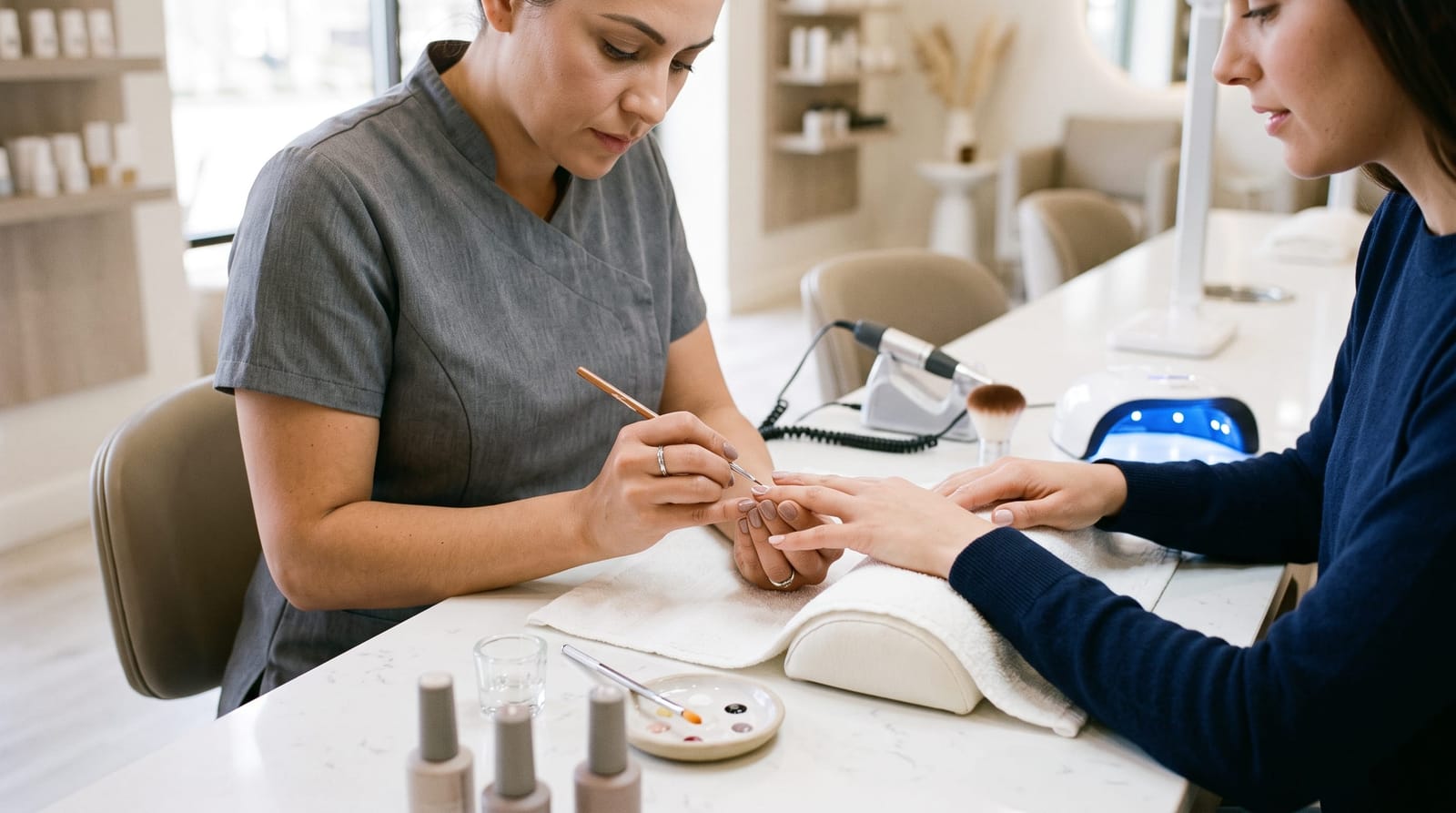
How Custom Nail Art Is Applied Over the Overlay
The basic sequence is to establish the nail’s shape and structure first, then add the design. Exact preparation, curing, and finishing steps depend on the product system, so this is an appointment overview rather than a home-application tutorial.
The nail shape and gel foundation come first
Your nail artist begins by discussing the desired outline and how much existing length to retain. The overlay is then applied and shaped to provide a surface for the planned finish.
This foundation affects the artwork. A clean, even surface helps a fine French line look intentional, while the nail’s width and length determine how much detail will fit comfortably. A design reference is most useful at the start of the appointment, not after the base is complete.
Color and artwork are added in a planned order
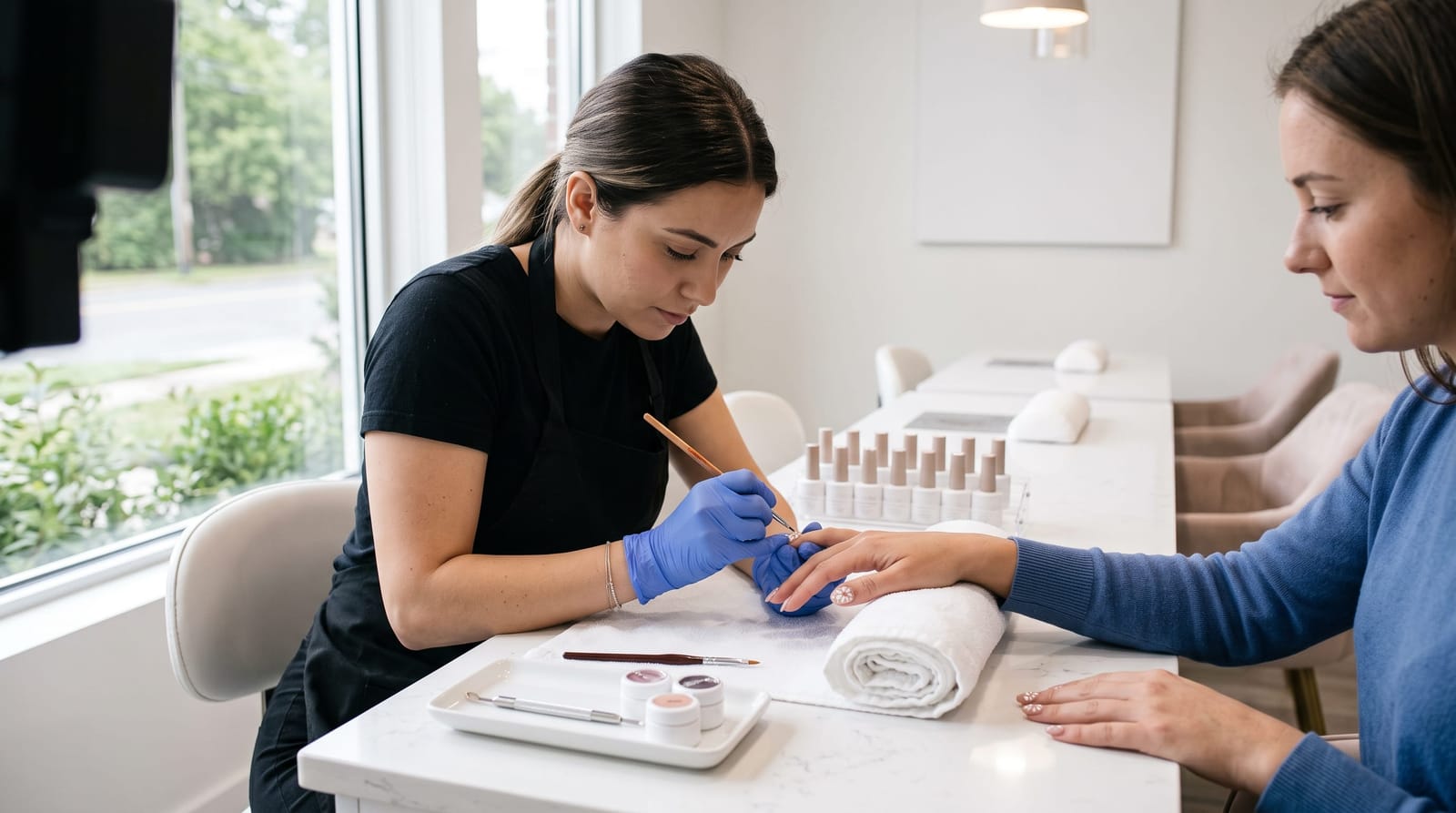
Once the overlay is ready, the artist can apply a sheer base, an opaque color, or compatible decorative products. Painted flowers, linework, dots, and other details are arranged around the nail’s proportions.
Not every effect goes through the same sequence. A reflective powder finish, a painted outline, and a raised embellishment may require different placement and finishing methods. Some elements sit beneath a smooth final coat; others are intended to retain their texture.
The finish is chosen to suit the design
A glossy finish can emphasize depth and reflection. A matte finish changes the way color and painted detail appear. Mixed finishes can also become part of the design, for example, glossy details against a matte background, when the chosen products allow it.
The important distinction is that the art is planned with the overlay, rather than treated as an unrelated extra. Shape, base color, decoration, and finish all contribute to the final look.
Why Choose an Overlay for a Natural Look With Artistic Detail?
The appeal is straightforward: keeping your own nail length does not mean limiting yourself to plain polish. An overlay can support a design that feels understated from a distance and more detailed up close.
Here, “natural-looking” describes the visual result, not a claim that one enhancement system is healthier than another. Sheer color, balanced proportions, and restrained decoration can create that effect.
- Keep the outline familiar: Work with a length and shape close to what you already wear.
- Let the base show through: A translucent pink, beige, or clear-looking finish can leave visual breathing room around the art.
- Choose a focal point: One decorated nail or a small motif on each hand adds personality without filling every surface.
- Repeat a detail: A recurring color, curve, or tiny flower can connect the set without making every nail identical.
An overlay is less suited to a reference whose defining feature is extra length. It also involves upkeep; it is not simply ordinary polish with a different name. Those tradeoffs are worth considering alongside the aesthetic.
Nail Art Designs That Translate Well Onto Hard Gel Overlay
Many designs can be adapted to an overlay. The best starting point is the amount of visible space on your nails, followed by your preferred colors and tolerance for texture.
Micro French tips and colored edges
A narrow French tip leaves much of the base visible, making it a good design direction for an understated finish. White is only one option: a muted blue, deep red, or fine metallic-looking edge can change the mood without adding much visual weight.
Proportion matters more than copying a reference exactly. On a shorter nail, a broad tip occupies more of the surface; a slimmer line leaves more room for the base color.
Fine lines, dots, and small abstract shapes
Curves, offset dots, and simple geometric accents can be arranged around almost any nail outline. Keeping a limited palette helps separate the individual details.
For a hypothetical design, imagine a sheer pink overlay with a thin navy curve on each ring finger and a single navy dot on the remaining nails. The repeated color ties the set together, while the different placements keep it from feeling uniform.
Florals and miniature motifs
Small flowers, hearts, stars, and similar motifs work well when simplified to suit the available space. A few clear shapes often communicate an idea more effectively than a crowded miniature illustration.
When adapting a long-nail reference, the artist might reduce the number of petals, enlarge one focal flower, or move the motif toward a corner. For more proportion-focused inspiration, see these best nail designs for short nails.
Shimmer, reflective finishes, and soft color effects
If you want detail without a recognizable picture, consider a pearly finish, a soft color fade, or a subtle shimmer. These effects make the surface itself the feature rather than relying on several separate decorations.
Reference photos are especially helpful for these looks because words such as “glazed,” “chrome,” and “iridescent” can describe noticeably different results. Bringing an image makes it easier to discuss whether you want a gentle sheen or a more reflective finish.
Raised details and embellishments
An overlay does not automatically rule out textured art. Small raised accents or decorative stones may be possible, depending on the products and design.
The tradeoff is practical as well as visual: raised elements feel different from a smooth surface and may be more noticeable during everyday tasks. Discuss their size and placement before choosing them, especially if your hands frequently move through hair or fabric.
Turning Inspiration Into a Wearable Design
A reference photo is a starting point, not a requirement to reproduce every detail. The most useful consultation separates the elements you love from those you are happy to change.
- Name the main attraction: Is it the color palette, the shape, the tiny artwork, or the reflective finish?
- Show your current nails: A photo helps communicate the starting length and any existing product.
- Decide how much art you want: A pair of accent nails and a fully detailed set are different appointment requests.
- Mention texture preferences: “Smooth only” gives the artist a clear design boundary.
- Allow for adaptation: A long-nail reference may need fewer details or different spacing on a shorter overlay.
If added length is central to your idea, comparing GelX nail designs can help clarify whether an extension service better matches your goal. The design and the underlying service are related decisions, but they are not the same decision.
Maintenance and Future Design Changes
An overlay grows out with the natural nail, so its appearance and structure change over time. Maintenance timing depends on the product, nail growth, current condition of the set, and the artist’s assessment. There is no single wear period that can be promised for every client.
At booking, ask how the salon handles maintenance, changes to the artwork, and eventual removal. A new design may require removing the existing decorative finish and rebalancing the underlying overlay rather than simply painting over everything.
Removal methods also differ between gel systems. Knowing which product is on your nails helps the next professional plan the service. For pain, irritation, or other health concerns, consult a licensed healthcare professional rather than treating a cosmetic appointment as medical care.
Planning Your Spokane Valley Appointment
For a NailzByDelz appointment inquiry, describe both the foundation and the art you want. “Hard gel overlay on my natural length with a sheer base and two floral accent nails” communicates far more than “gel nails with a design.”
Include your inspiration images and mention any existing enhancement that may need attention. Ask whether hard gel overlay and your chosen artwork can be accommodated, what the appointment includes, and which openings are currently available. A photograph alone cannot confirm service time or availability.
The best design plan starts with a simple distinction: keep your natural length and decorate it, or choose a service that adds length. If keeping your own length is the goal, a hard gel overlay can provide a structured foundation for anything from a delicate French edge to personalized painted art.
Ready to plan your set? Contact NailzByDelz to confirm the service and current Spokane Valley booking options, then book a design made for you.