How Long Does Gel Hard Overlay Last and When Do You Need a Rebalance?
One of the most common questions clients ask before booking a Gel Hard Overlay appointment is a simple one: how long is this actually going to last? It's a fair question, and one that deserves a real, thoughtful answer rather than a vague "it depends." Whether you're new to the service or you've been enjoying overlays for years, understanding the wear timeline helps you plan your appointments, take better care of your nails between visits, and get the most out of every application. This guide walks you through what to expect from your Gel Hard Overlay in terms of longevity, what signs tell you it's time to come back in, which lifestyle habits affect how long your overlay holds up, and how the approach at NailzByDelz is designed to support lasting results from the very first step.
What's the Typical Wear Time for Gel Hard Overlay?
Most clients can expect their Gel Hard Overlay to look and feel great for approximately three to four weeks. That's the general wear window that reflects what hard gel is designed to do: provide a durable, flexible layer of protection that moves with your natural nail rather than against it.
Unlike softer gel products, hard gel has a dense, resilient structure that holds up remarkably well through daily activity. It doesn't chip the way traditional nail polish does, and it maintains its finish without the brittleness that sometimes comes with thinner coatings. That combination of flexibility and strength is exactly why hard gel overlays have become a go-to for clients who want long-lasting results without adding artificial length.
The Three-to-Four-Week Window Explained
Here's why three to four weeks is the sweet spot: your natural nails grow continuously, and as they do, a small gap begins to develop between the base of the overlay and your cuticle area. This is completely normal: it's just your nail doing what nails do. Over time, that growth gap becomes more noticeable and can affect both the appearance and the structural integrity of the overlay. By the four-week mark, most clients are ready for a rebalance to keep everything looking clean and feeling secure.
Some clients find their overlays hold up beautifully for the full four weeks. Others may notice changes closer to the three-week mark, depending on how quickly their nails grow and how their lifestyle affects the overlay. Both experiences are completely normal.
Signs It's Time for a Rebalance
Knowing when to come back in is just as important as knowing how long to expect the overlay to last. A rebalance isn't just about aesthetics: it's about keeping your nails healthy and the overlay performing the way it should.
Visual Cues to Watch For
- A visible growth gap near the cuticle: This is the clearest sign. When you can clearly see new nail growth between your cuticle and the edge of the overlay, it's time to have the product redistributed and freshened up.
- Changes in the overlay's surface: If you notice any dullness, surface texture, or slight lifting at the edges, those are signs the overlay has reached the end of its natural wear cycle.
- A feeling of imbalance: Hard gel overlays should feel comfortable and even across the nail. If a nail starts to feel slightly off, thicker at the tip than near the base, that's a sign the growth has shifted the balance enough to warrant attention.
What Happens If You Wait Too Long
Waiting significantly past the four-week window can make the rebalance process more involved. When the growth gap becomes too wide, the overlay can become more vulnerable to lifting or breakage, and the overall look becomes harder to refresh cleanly. Staying on a consistent schedule helps protect both the overlay and your natural nails underneath.
If you're curious about what the removal process looks like when an overlay reaches the end of its lifespan, you can learn more about how to remove gel hard overlay safely and what that experience involves at NailzByDelz.
Lifestyle Factors That Affect How Long Your Overlay Lasts
Hard gel is genuinely durable, but it's not entirely immune to the demands of daily life. Several factors can either extend or shorten how long your overlay looks and performs its best.
Water and Moisture Exposure
Prolonged and frequent exposure to water, think long soaks, frequent dishwashing without gloves, or regular swimming, can gradually affect the bond between the overlay and your natural nail. Water causes natural nails to expand and contract, and over time that movement can put stress on the overlay's edges. Wearing gloves for household cleaning and dish-washing is one of the simplest habits that can meaningfully extend your wear time.
Your Work and Daily Activities
Clients who work with their hands in more demanding environments, frequent typing, manual tasks, outdoor work, may find they're at the shorter end of the wear window. That's not a reflection of a poor application; it's simply the result of nails working harder every day. Understanding your own lifestyle helps set realistic expectations and can help you and your nail artist at NailzByDelz fine-tune the application for your specific needs.
Nail Care Habits Between Appointments
How you treat your overlay between visits matters more than most clients realize. A few habits that support longevity:
- Applying cuticle oil regularly keeps the skin around the nail hydrated, which reduces stress on the overlay's edges
- Avoiding using your nails as tools (prying open packages, scraping surfaces) protects the edges from unnecessary impact
- Using hand lotion throughout the day supports overall nail flexibility without affecting the overlay's finish
Your Natural Nail's Growth Rate
Everyone's nails grow at a slightly different pace. Faster nail growth means the three-to-four-week window may feel shorter simply because the growth gap becomes noticeable sooner. This is completely natural and doesn't affect the quality of your overlay: it just means your ideal rebalance schedule might lean toward three weeks rather than four.
How NailzByDelz's Application Method Supports Lasting Results
Longevity doesn't start at week two: it starts in the chair during your initial appointment. The way a Gel Hard Overlay is applied has a direct impact on how well it holds up over time, and the sculpting technique used at NailzByDelz is designed with that in mind.
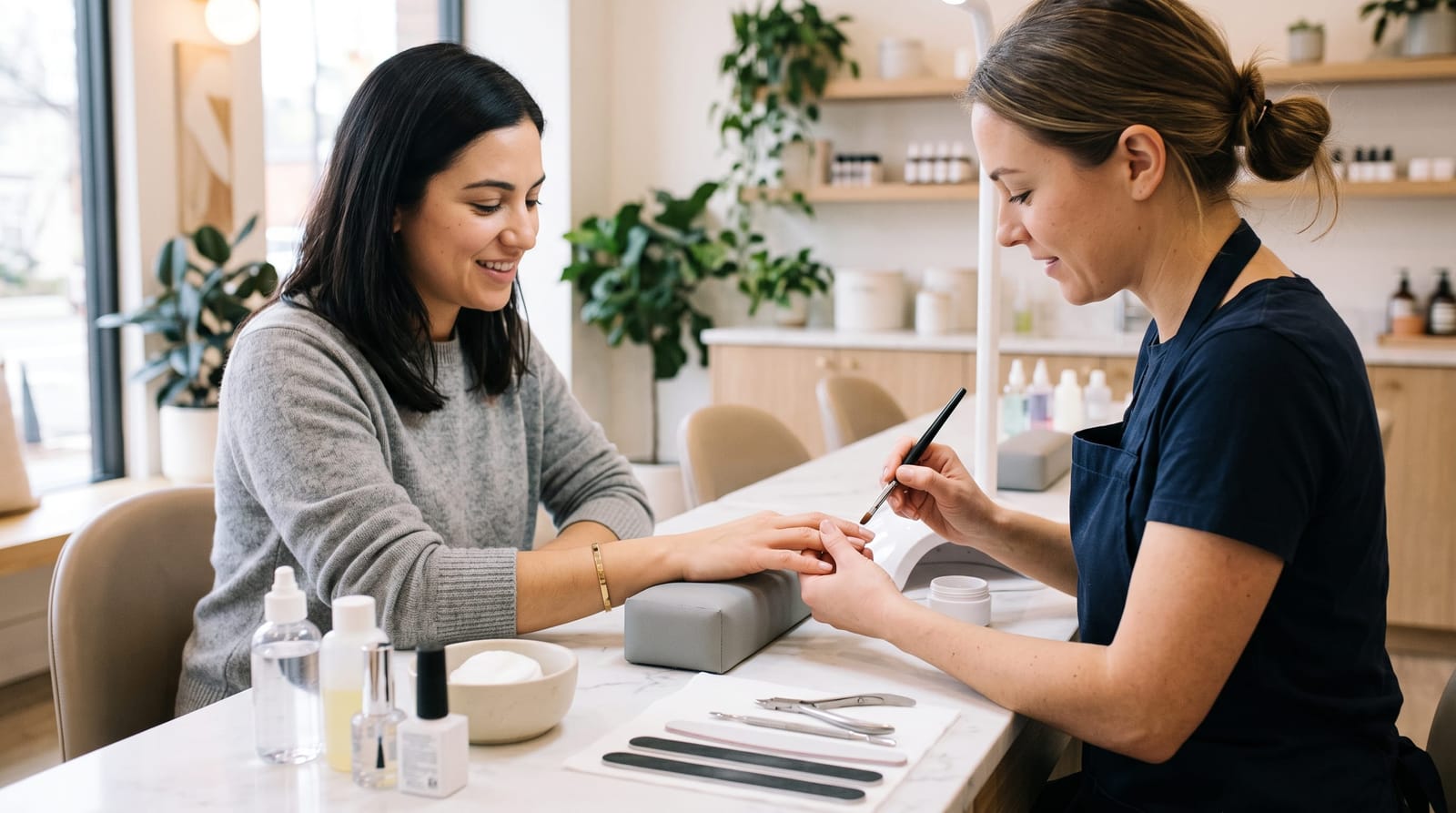
Preparation is the foundation of everything. Proper nail prep, including careful cuticle work, surface preparation, and ensuring the nail plate is clean and ready to bond, creates the conditions for the overlay to adhere evenly and securely. Skipping or rushing this step is one of the most common reasons overlays don't last as long as they should.
The product is then applied in a way that respects the natural shape of each nail, with careful attention to thickness and coverage. Overlays that are applied too thin in certain areas or too thick in others can behave inconsistently over time. At NailzByDelz, the goal is an overlay that feels balanced and natural from day one, because that balance is what helps it wear well for weeks. You can read more about the full process in the gel hard overlay application process breakdown.
The Difference Between a Fill and a Rebalance
Clients sometimes hear the terms "fill" and "rebalance" used interchangeably, and while they're related, they describe slightly different services. Understanding the distinction helps you communicate your needs clearly when booking.
What a Fill Typically Involves
A fill generally refers to adding product to the new growth area, the gap between the cuticle and the existing overlay, to keep the nail looking seamless and even. This is the standard maintenance appointment most clients schedule every three to four weeks.
What a Rebalance Addresses
A rebalance goes a step further. Over time, as the overlay grows out, the weight and thickness of the product can shift toward the tip rather than sitting evenly across the nail. A rebalance redistributes the product so that the overlay once again has a balanced, natural profile from cuticle to tip. It keeps both the look and the structural performance of the overlay where they should be. NailzByDelz offers both services to support clients at every stage of their overlay wear cycle.
Planning Your Appointment Schedule
The simplest approach is to book your rebalance appointment before you leave your initial overlay appointment. Scheduling three to four weeks out while everything is fresh means you're less likely to let more time slip by than intended, and it keeps your nails consistently looking their best.
If you're not yet sure whether a Gel Hard Overlay is the right service for your nails and lifestyle, it helps to start with the basics. What is a gel hard overlay covers who this service is designed for and what makes it different from other nail options. And if you've been weighing your choices between overlay and extensions, the Gel Hard Overlay vs GelX comparison is a helpful place to explore those differences before your appointment.
Conclusion
Gel Hard Overlay typically lasts three to four weeks with proper care and a consistent maintenance schedule. Knowing what to watch for, growth gaps, surface changes, or a slight imbalance in how the overlay feels, helps you time your rebalance appointments just right. Lifestyle habits like protecting your nails from prolonged water exposure and keeping your cuticles hydrated make a real difference in how long your overlay performs. And the quality of the initial application sets the stage for everything that follows. At NailzByDelz in Liberty Lake, the entire process is designed to give your overlay the best possible foundation for lasting results. Ready to get started or schedule your next rebalance? Reach out to book your appointment today.